Vietnam Industrial Landscape: The Escalating Demand for High-Quality Aluminum Strips
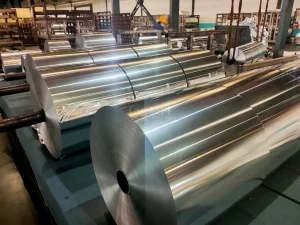
As Southeast Asia's manufacturing epicenter surges ahead, Vietnam is undergoing a massive transformation in its industrial supply chains. Industrial parks spanning Bac Ninh, Hai Phong, Binh Duong, and Dong Nai have evolved into global manufacturing hubs. With major global electronic giants, automotive suppliers, and grid developers setting up massive assembly plants, the raw material requirement has transitioned from basic structural metals to ultra-high precision non-ferrous alloys. Among these, the aluminum strip is playing a critical, irreplaceable role.
Key Drivers of Aluminum Strip Consumption in Vietnam
Industrialization across Vietnam dictates high performance and cost-effectiveness. Key sectors driving demand include:
- Electric Power Grid Infrastructure: Large-scale expansion of power transmission grids in northern and southern regions requires high-grade 1060 and 1070 aluminum strips for transformer windings. Due to aluminum's exceptional electrical conductivity-to-weight ratio, it has become the standard replacement for traditional copper windings.
- Consumer Electronics and EV Batteries: With companies localized near Hanoi and Ho Chi Minh City assembling batteries, smart devices, and telecommunication hardware, high-purity aluminum alloys are required for cell connectors, heat sinks, and electromagnetic shielding.
- HVAC and Mechanical Piping: The rapid growth of commercial infrastructure and cold chain logistics systems calls for robust 3003 aluminum strips, optimized for multi-layer composite pipes and heat exchanger fins.
The Shift Toward Factory-Direct Strategic Procurement
Vietnamese procurement directors face strict cost and quality constraints. Navigating intermediate traders often leads to inconsistent product quality, variable lead times, and lack of technical support. By sourcing direct from specialized manufacturers in China, Vietnamese businesses gain direct access to metallurgical test certificates, precise thickness tolerances (down to ±0.01 mm), and customized slitting widths tailored exactly to their machinery, all while benefiting from regional trade structures like the RCEP and ASEAN-China FTA.