1 / 1

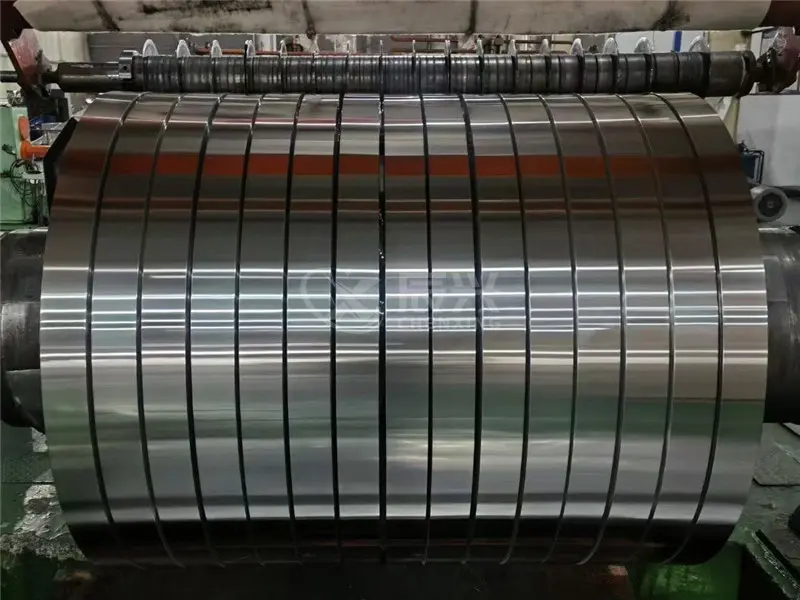
Aluminum Strip is classified based on alloy series, processing temper, and application scenarios, each with distinct characteristics to meet specific usage requirements. The key classifications are summarized in the table below:
| Classification Criterion | Category | Key Features | Typical Applications |
|---|---|---|---|
| Alloy Series | 1000 Series (Pure Aluminum Strip) | Aluminum ≥ 99.0%, high conductivity, good corrosion resistance | Heat sinks, electrical conductors, food packaging edges |
| 3000 Series (Al-Mn Alloy Strip) | Manganese 1.0%-1.5%, balanced strength and formability | Cookware edges, decorative strips, automotive trim | |
| 5000 Series (Al-Mg Alloy Strip) | Magnesium 1.0%-5.0%, high strength, excellent corrosion resistance | Marine components, structural brackets, pressure vessel parts | |
| 6000 Series (Al-Mg-Si Alloy Strip) | Heat-treatable, high strength after aging | Automotive structural parts, architectural profiles, hardware | |
| Processing Temper | O State (Annealed) | High ductility, easy to bend and stamp | Complex forming parts, decorative components |
| H14 State (Semi-Hard) | Moderate strength and ductility | General structural parts, packaging clips | |
| T6 State (Heat-Treated) | High strength, good rigidity | Automotive load-bearing parts, industrial brackets |
Aluminum Strip has strict dimensional control to ensure processing accuracy, and its mechanical properties vary with alloy and temper. Typical specifications and performance data are shown below:
| Alloy & Temper | Thickness Range (mm) | Width Range (mm) | Tensile Strength (MPa) | Elongation (%) |
|---|---|---|---|---|
| 1060-O | 0.1 – 6.0 | 5 – 200 | 75 – 105 | ≥ 25 |
| 3003-H14 | 0.2 – 8.0 | 10 – 300 | 130 – 180 | ≥ 5 |
| 5052-H32 | 0.3 – 10.0 | 15 – 400 | 170 – 210 | ≥ 10 |
| 6061-T6 | 0.5 – 12.0 | 20 – 500 | 310 – 380 | ≥ 8 |