Direct Mill Shipments & Customized Specifications for Global Procurement
In-Depth Analysis of Supply Chains, Coating Metallurgy, and Macro Market Drivers
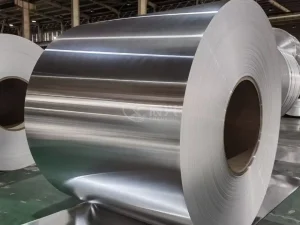
The global demand for color coated aluminium coils has witnessed exponential growth over the past decade. Driven by the modern architectural demand for lightweight, durable, and highly customizable materials, color coated aluminium has emerged as a premier substrate. By applying liquid coatings such as PVDF (polyvinylidene fluoride) or PE (polyester) onto the surface of cold-rolled aluminum through continuous coil coating processes, manufacturers produce an alloyed material that exhibits superior atmospheric protection, ultraviolet resistance, and chemical stability.
From a metallurgical perspective, color coating isn't merely aesthetic; it establishes a chemical barrier system. The substrate alloy, typically chosen from the 1000, 3003, or 5000 series, provides the mechanical strength, flexural rigidity, and structural elongation required for roll forming. Meanwhile, the baked-on polymer coating provides resistance to aggressive industrial environments, high-salinity coastal areas, and intense solar radiation. Global procurement agents prioritising lifecycle cost analysis consistently choose color coated aluminium over traditional post-painted galvanized steel (PPGI) due to its resistance to rust and oxidation.
The core of buying color coated aluminium lies in understanding your environment. PVDF (Fluorocarbon) coatings contain a carbon-fluorine bond, which is one of the strongest chemical bonds in organic chemistry. This molecular structure gives the material outstanding weatherability, making it ideal for exterior building envelopes. On the other hand, PE (Polyester) coatings are more cost-effective, providing excellent surface gloss and internal application properties, which make them highly popular for home appliances and interior wall paneling.
| Coating Type | Chemical Composition | UV Resistance | Salt Spray Resistance | Recommended Applications | Average Service Life |
|---|---|---|---|---|---|
| PVDF (Kynar 500) | 70% Fluorocarbon resin | Outstanding (Class A) | > 3000 Hours | Exterior Cladding, Facades, High-Rise Projects | 20 - 30 Years |
| PE (Polyester) | Thermosetting resin | Moderate (Class B) | > 1000 Hours | Indoor Ceilings, Appliance Panels, Gutters | 10 - 15 Years |
| FEVE (Fluorourethane) | Fluoroethylene Vinyl Ether | Excellent (High Gloss) | > 2500 Hours | Commercial Identity Branding, Premium Roofs | 15 - 25 Years |
Proven Performance Indicators That Safeguard B2B Investment Returns
Continuous Metallurgy & Coating Industry Experience
Export Footprint Reaching Global Engineering Projects
Tension Leveling, Spectral Color Match & Automated Coating Control
Rapid Technical Problem Solving & 24-Hour B2B Support
How Modern Infrastructure and Vertical Integration Drive Unmatched B2B Cost Competitiveness
When procurement directors evaluate where to buy color coated aluminium coils, Chinese factories consistently rank at the top. This dominance is not simply based on labour cost arbitrage; it is the result of deep industrial clustering, state-of-the-art coating equipment, and full supply chain integration. The modern Chinese industrial clusters in provinces like Henan, Shandong, and Jiangsu combine raw smelting, hot rolling, cold reduction, leveling, chemical pretreatment, and multi-bake coating lines within a 50-mile radius.
This level of integration ensures that quality issues are spotted immediately, reducing lead times to as low as 15–20 days. Chinese manufacturers run advanced high-speed coating lines (reaching up to 150 meters per minute) equipped with automated thickness gauges and online color scanners. By monitoring variables in real-time, such as the curing temperature inside gas-fired catenary ovens and film thickness via infrared sensors, these factories achieve uniform coating thickness (with standard deviations under 1 micron).
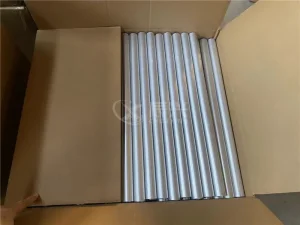
Furthermore, proximity to major deep-water ports like Qingdao, Tianjin, and Shanghai simplifies international shipping. B2B buyers benefit from streamlined customs processing, seaworthy wooden pallet eye-to-sky packaging, and moisture-vapor barrier films that protect the coated surface from corrosion during transit.
Engineered Materials Tailored to Modern Structural and Industrial Environments
High-elongation alloys coated with durable polymers, designed for vehicle body panels, container walls, and transit vehicle ceiling panels.
Non-toxic coatings compatible with food contact standards, including materials for high-barrier food cans, aerosol caps, and industrial pull tabs.
Highly conductive core alloys coated with anti-static, heat-dissipating, or highly reflective films for modern digital devices and control panels.
High-strength alloy substrates designed to withstand wide temperature swings and high atmospheric pressure in aviation applications.
PVDF-coated coils designed for architectural facades, metal roofing, rain gutters, composite panels, and structural insulation sheets.
Scratch-resistant and easy-to-clean coatings, ideal for refrigerator panels, washing machines, and electronic control housings.
Green Initiatives, Digital Controls, and Next-Generation Polymer Developments
The color coated aluminum industry is undergoing a transition driven by carbon neutrality mandates and digital manufacturing advancements. The most significant shift is the push toward green chemistry. Factories are moving away from traditional hexavalent chromium pre-treatments in favour of eco-friendly, chromate-free conversion coatings. These chromium-free alternatives provide comparable adhesion and corrosion resistance while complying with regulations like REACH and RoHS.
On the polymer side, raw material developers are incorporating nano-ceramic particles into coatings. This technology improves hard-coat properties, offering superior scratch resistance and self-cleaning capabilities. Dust and industrial pollutants can be washed away by normal rainfall, keeping architectural facades clean and reducing maintenance costs.
B2B buyers are also demanding greater traceability. Modern factories are integrating RFID tracking systems and laser-marking barcodes onto the reverse side of coils. This enables buyers to scan a finished coil and instantly access the full production run data, including:
How Technical Buyers Secure Compliance, Tolerate Variances, and Protect Cargo
Securing a reliable supply of color coated aluminum coils requires a structured quality control framework. The biggest risks during long-distance maritime transport are paint cracking during roll-forming, color mismatch between different production runs, and moisture oxidation (white rust) from ocean humidity. To mitigate these risks, professional buyers should include the following checklist in their purchasing specifications:
Direct Answers from Our Engineering & Metallurgy Teams
Connect directly with our metallurgy plant and paint coating engineers. Receive a detailed quotation within 24 hours.
Tracking Global Commodity Demands, High-Performance Coatings, and Trade Dynamics
Premium Sourced Materials for Packaging, Architecture, and Automotive Applications