
Tailored metallurgical properties designed to withstand regional forming pressures and heavy structural demands.
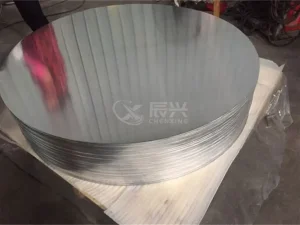
Optimal purity levels (99.5%) ideal for deep-drawing household utensils widely preferred across Iraq.

Manganese-alloyed blanks delivering exceptional durability for commercial pressure cookers and oil-drum basins.
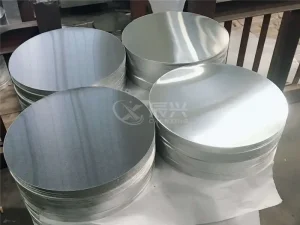
Perfectly flat, burr-free edge profiles that drastically lower stamping and shear tool wear in local workshops.

Specially alloyed to resist harsh desert temperatures, solar radiation, and sandstorms along national highways.
Engineered metallurgy, strict quality controls, and robust Middle East trade routes.
As the industrial landscape of Iraq undergoes significant modernization, manufacturers in major urban hubs like Baghdad, Erbil, Basra, and Mosul are rapidly shifting to high-efficiency raw materials. Among these, premium-grade aluminum circles (metal discs) serve as a fundamental block for fabricating consumer household wares, kitchen systems, industrial lighting components, and modern road safety signs.
Historically, small-scale enterprises relied on manual cutting and casting methods. However, with rising labor costs and the need for dimensional consistency, modern hydraulic stamping units across the region now demand pre-cut, high-precision aluminum discs. Selecting the right aluminum circle supplier is no longer a matter of price alone—it involves a critical evaluation of grain size, tensile strength, earing rates, and chemical purity.
Globally, aluminum circle production requires continuous casting and hot rolling to eliminate internal metallurgical stresses. As a key global supplier, our production facility interfaces with international freight hubs to provide seamless shipping directly to the Port of Umm Qasr or overland via Turkey and Jordan. This robust logistics framework ensures that Iraqi manufacturing operations run continuously without costly raw material delays.
| Alloy Grade | Typical Thickness | Diameter Ranges | Temper Status | Primary Industrial Use Case in Iraq |
|---|---|---|---|---|
| Alloy 1050 | 0.5mm - 6.0mm | 100mm - 1200mm | O, H12, H14 | Traditional deep-drawn pots, basins, and kettles. |
| Alloy 1060 | 0.6mm - 5.0mm | 150mm - 1100mm | O, H14, H16 | Electrical distribution components and lighting panels. |
| Alloy 3003 | 0.8mm - 8.0mm | 100mm - 1500mm | O, H14, H24 | High-pressure cookers, non-stick frying pans, industrial signboards. |
| Alloy 5052 | 1.0mm - 6.0mm | 200mm - 1300mm | O, H32, H34 | Corrosive environments, marine parts, heavy highway signs. |
When stamping raw metal circles under high-tonnage hydraulic presses, local fabricators often run into mechanical failures like cracks, localized tearing, and the dreaded "orange peel" texture. These issues stem from improper grain crystallization within the aluminum blank.
Our state-of-the-art hot rolling mill utilizes continuous annealing processes. By controlling the exact recrystallization temperature, we minimize earing rate properties (under 2%) and achieve a highly uniform grain structure. This makes our discs highly suited for both shallow forming and intense deep drawing up to a draw ratio of 2.2.
All shipments are verified under international standards:
✓ EN 573-3 (Chemical Composition)
✓ EN 485-2 (Mechanical Properties)
✓ SGS / BV / TUV Third-Party Verification
✓ COSQC Certificate for Customs Clearance
How local industries apply our technical aluminum configurations to achieve high yield rates.
Iraq's cookware market demands heavy-bottomed pans and deep pots capable of enduring continuous high-heat cooking. High-purity 1050 and 1100 alloy discs allow deep deformation without structural splits.
To support reconstruction projects, municipal safety networks require standardized traffic warning systems. Reflective-grade 3003 and 5052 discs provide structural rigidity against strong desert winds.
Modern warehouses, commercial properties, and light manufacturing plants in Erbil use high-reflectivity mirror aluminum discs to maximize light distribution and reduce industrial power draw.
Explore our full line of export-ready aluminum alloys and surface finishes optimized for the Iraqi market.
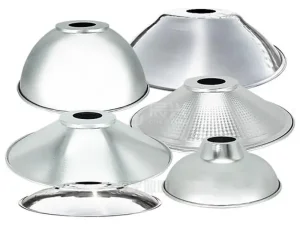
Advanced mirror-polished options designed for commercial dome lighting systems.
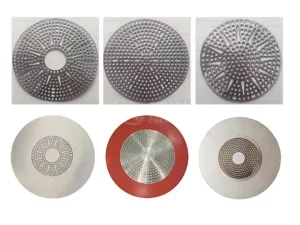
Optimized for high thermal performance across induction cooktops.
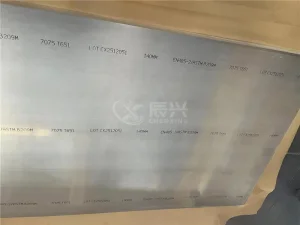
Thick structural plates suitable for facades, logistics bases, and heavy manufacturing.
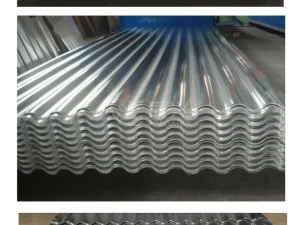
Corrosion-resistant roofing designed to withstand extreme desert heat.
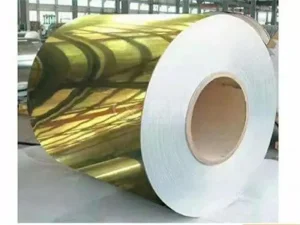
Bright mirror finish ideal for cosmetic packaging and interior design panels.
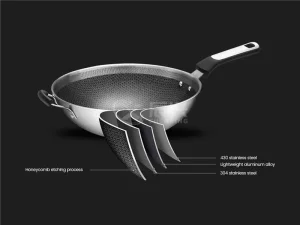
Composite steel-aluminum blanks providing rapid, even heat distribution.
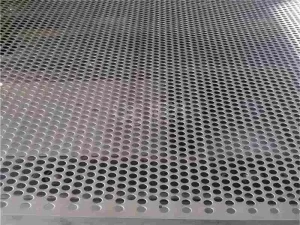
Perforated panels optimized for ventilation systems and architectural sunshades.
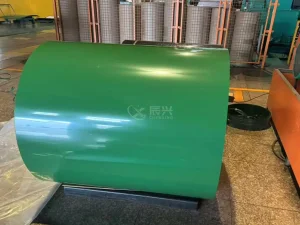
Durable outer finishes designed to withstand harsh sunlight without fading.
Driven by sustainability initiatives and national manufacturing targets, the Middle East is rapidly scaling up its domestic fabrication capabilities. Modern plants are focusing on minimizing carbon footprints and reducing raw material waste. In this context, sourcing pre-cut aluminum blanks provides a significant advantage over large coil sheets. Using ready-to-stamp discs allows factories to skip the step of edge trimming, reducing scrap processing steps and saving on transport weights.
Additionally, the shift toward higher-performing alloys, such as 3003 and 3004, is reshaping regional product standards. These alloys offer superior structural strength compared to traditional 1050 grade blanks. This enables the production of thinner, lighter containers without sacrificing overall strength, lowering per-unit production costs.
Exporting raw metal components to Iraq requires a thorough understanding of regional trade regulations and import protocols. Shipments arriving through the Port of Umm Qasr or northern border points must be accompanied by detailed documentation. This includes mill test certificates (MTCs), raw material declarations, and safety datasheets verified by testing authorities like SGS or Intertek. Our logistics teams coordinate closely with customs brokers to verify compliance before shipping, ensuring that deliveries arrive smoothly at local factories.
Expert answers on technical specifications, regional logistics, and international trade compliance.