Direct supply paths from certified state-of-the-art Chinese manufacturing facilities ensuring optimal metallurgical properties and supply chain reliability.
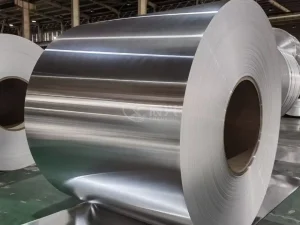
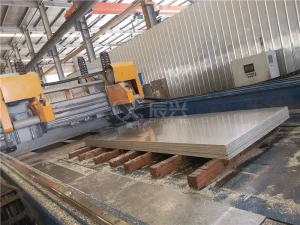
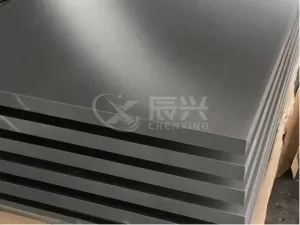
An in-depth structural review of metallurgical excellence, market trends, and manufacturing innovations driving global marine and industrial sectors.
The global demand for high-strength, low-density structural materials has positioned Aluminium 5083 at the pinnacle of modern metallurgy. Known primarily for its exceptional mechanical properties in highly corrosive environments, 5083 is an Al-Mg-Mn alloy widely recognized for its high yield strength, outstanding weldability, and resistance to stress corrosion cracking. Industrial procurement hubs and design engineers looking for reliable supply structures increasingly evaluate China 5083 Aluminium Plate Companies & Factories to achieve structural durability without breaking financial bounds.
In maritime applications, where structural fatigue and electrochemical degradation are constant threats, the purity of the raw material and precise heat treatment process become paramount. Premium Chinese mills utilize advanced vertical direct chill (VDC) casting methodologies paired with digital-controlled hot rolling mills to ensure precise grain refinement. By maintaining rigorous control over the Mg concentration limits (4.0% to 4.9%) and the introduction of critical micro-alloying elements like Manganese (Mn) and Chromium (Cr), these factories consistently exceed the benchmark guidelines mandated by leading international marine classification societies.
Aluminum 5083's high corrosion resistance is due to the spontaneous formation of a protective surface oxide layer. In marine atmospheres containing elevated sodium chloride levels, standard aluminum alloys might suffer from localized pitting. However, 5083's solid solution matrix is designed to withstand severe environments, especially when processed under specialized tempers like H116 or H321.
The H116 temper is characterized by a stabilized microstructure that prevents the continuous grain boundary precipitation of the beta-phase (Mg₂Al₃), which is highly susceptible to intergranular corrosion (IGC) and stress corrosion cracking (SCC). Factories in China utilize proprietary heat treatment parameters and inter-pass cold-rolling reductions to guarantee that the ASTM G67 nitric acid mass loss test results remain well below the strict threshold limits required by global marine engineers.
Exploring next-generation alloy refinements, advanced thermal treatments, and the pathway toward decarbonized, high-strength aluminum plate production.
Future development phases for 5083 are centered around trace additions of scandium (Sc) and zirconium (Zr). This creates coherent Al₃(Sc, Zr) nanoprecipitates, which suppress recrystallization during welding and hot-rolling cycles. This results in significantly improved fatigue limits and a fine-grained heat-affected zone (HAZ).
Integrating multi-stage continuous spray quenching systems in China’s rolling lines ensures high thermal uniformity across large plate widths. This minimizes internal residual stresses (low distortion during precision CNC machining) while achieving the exact mechanical parameters needed for defense-grade marine applications.
Leading Chinese refineries are shifting toward zero-emission energy inputs (hydroelectric and solar-powered smelting) to produce "Green 5083 Plates." Advanced recycling processes sort post-industrial scrap to incorporate high fractions of circular aluminum, reducing the lifecycle carbon footprint by up to 75%.
Discover how the application of engineered 5083 aluminum plates solves structural, weight, and environmental challenges across key global sectors.
5083-H116 plates are extensively used for ship hulls, superstructures, decks, and marine components. The alloy’s high strength in marine environments reduces structural weight, increases cargo capacity, and lowers vessel emissions.
Unlike steel alloys which become brittle at low temperatures, 5083 aluminum maintains its ductility, toughness, and tensile strength at cryogenic temperatures, making it a reliable material for liquefied natural gas storage tanks and piping networks.
By replacing heavy steel panels in semi-trailers, dump trucks, and dry bulk silos with high-strength 5083 plate configurations, transport fleets achieve significant tare weight reductions. This leads to reduced fuel consumption and increased payload efficiency.
Combining modern industrial automation with efficient resource deployment to guarantee high product quality and shorter lead times.
Modern Chinese aluminum manufacturing facilities have transitioned from traditional mechanical processing to advanced Industry 4.0 Smart Production Lines. By integrating digital twin technologies, automated thickness gauge controllers (AGC), and advanced flatness control systems (AFC), these factories achieve plate tolerances that are far tighter than international standard limits.
Furthermore, the high level of supply chain integration within China's industrial zones ensures rapid access to raw materials. Because bauxite refining, alloy casting, hot rolling, cold processing, and third-party testing labs are located in close geographical proximity, production and delivery times are reduced. This reliable ecosystem protects global buyers from delays caused by cross-border logistics disruptions or raw material shortages.
Whether you require standard stock sheets or custom dimensions, Chinese factories can quickly scale up production to handle large-volume orders. This flexibility is supported by rigorous quality control processes, including ultrasonic testing (UT) and mechanical property evaluations on every batch prior to shipment.
Ensuring compliance with international engineering codes and classification standards for global project integration.
For marine applications, plates are certified by international bodies like DNV, BV, ABS, LR, GL, and CCS. This verifies that our 5083 plates are fully compliant with maritime engineering regulations.
Every plate can undergo Ultrasonic Non-Destructive Testing (NDT) according to ASTM B594 or EN 10204 3.1/3.2, ensuring internal soundness and the absence of micro-voids, porosity, or internal cracking.
We provide full chemical and mechanical Mill Test Reports (MTR) for all shipments. This traceability links every delivered plate directly back to its original liquid melt batch.
Delivering unmatched reliability and industry-leading standards for clients across the globe.


Providing high-precision aluminum materials optimized for specific environments, operating loads, and structural requirements.




Get in touch with our engineering team for technical evaluations, pricing, and certified mill test reports. We respond within 24 hours.
Keep up with international aluminum market dynamics, technological breakthroughs, and engineering highlights.
Clear, direct answers regarding the technical specifications, applications, and logistics of ordering 5083 aluminum plates.
5083 aluminum has excellent resistance to seawater corrosion. Its high magnesium content provides structural strength without significantly increasing density. It maintains high weldability and tensile strength in heat-affected zones, and specialized tempers like H116 and H321 prevent stress corrosion cracking in seawater.
Both tempers offer high corrosion resistance, but their processing methods differ. H116 has its corrosion resistance determined by a specific microstructure test (such as ASTM G67), whereas H321 is strain-hardened and stabilized to achieve its mechanical properties. Both are widely accepted by marine classification societies.
Reliable factories provide EN 10204 3.1 Mill Test Certificates. For marine projects, plates can be certified by international classification societies such as DNV, ABS, Bureau Veritas (BV), Lloyd's Register (LR), and CCS, verifying that chemical composition and mechanical properties meet marine standards.
Unlike carbon steels, which become brittle below zero, 5083 aluminum is ideal for cryogenic applications. Its tensile and yield strength increase as temperature drops, while maintaining excellent fracture toughness. This makes it a preferred choice for LNG transport ships and storage tanks.
Standard thicknesses range from 3mm to over 200mm. Regular plate widths are 1500mm, 2000mm, and 2200mm, with lengths up to 8000mm. Advanced mills can also supply ultra-wide plates (up to 3800mm) to minimize the welding work required in shipbuilding.
Leveraging specialized manufacturing capabilities to supply high-performance aluminum products for diverse industrial requirements.