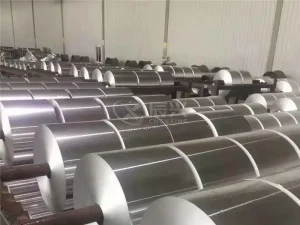
Major Global Buyers
Top buyers are in marine, shipbuilding, and pressure vessel sectors: Hyundai Heavy Industries, Daewoo Shipbuilding, China State Shipbuilding Corporation (CSSC), Fincantieri. Also Maersk Tankers, Teekay, and global LNG/LPG carriers. Industrial buyers: Air Liquide, Linde (cryogenic tanks), China CRRC (railway), and BASF/Dow (chemical storage). All demand 5083 for its excellent corrosion resistance, weldability, and marine-grade performance.
Frequently Asked Questions (FAQ)
What makes 5083 aluminium sheet suitable for marine applications?
5083 aluminium sheet contains 4.0–4.9% magnesium, which gives it outstanding resistance to seawater and salt spray corrosion. Tempers H116 and H321 are specifically certified for marine use, making it the preferred choice for shipbuilding, offshore platforms, and LNG carriers.
What is the difference between 5083-H116 and 5083-H321?
Both tempers offer similar mechanical properties (tensile strength 290–360 MPa), but H116 is produced by strain hardening and is primarily specified for marine environments due to its superior exfoliation corrosion resistance. H321 is thermally stabilized and also offers good corrosion resistance, commonly used in structural marine and pressure vessel applications.
Can 5083 aluminium sheet be welded easily?
Yes. 5083 is one of the most weldable aluminium alloys. It retains excellent strength and ductility in the heat-affected zone after welding, making it ideal for fabricated structures such as ship hulls, pressure vessels, and tank truck bodies. Filler alloy 5356 or 5183 is typically recommended.
What is the maximum service temperature for 5083 aluminium?
5083 aluminium is not recommended for continuous service temperatures exceeding 65°C (149°F). At elevated temperatures, the alloy may be susceptible to sensitization and stress corrosion cracking. For cryogenic applications, however, it performs excellently, which is why it is widely used in LNG storage and containment systems.
What international standards apply to 5083 aluminium sheet?
5083 aluminium sheet is recognized under multiple international standards: AA5083 (Aluminum Association, USA), EN AW-5083 (European Standard), UNS A95083 (Unified Numbering System), and DIN 3.3547 (German Standard). It also complies with ASTM B209 for sheet and plate, and various classification society rules for marine use.
What industries are the largest consumers of 5083 aluminium sheet?
The largest consumers are the marine and shipbuilding industries, followed by the transportation sector (tank trucks, railway), pressure vessel manufacturers, and the cryogenic/LNG industry. Aerospace (non-structural), electrical enclosures, and chemical storage also represent significant demand segments globally.