
Direct from our state-of-the-art mill. Standard configurations and tailored dimensions engineered to international quality thresholds.

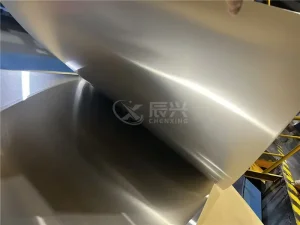
An in-depth perspective on metallurgical integrity, global macro demand dynamics, and technological roadmaps.
In the contemporary industrial landscape, procurement officers and structural engineers face a complex trifecta: raw material volatility, strict ESG and decarbonization mandates, and the absolute necessity of high-precision metallurgical properties. As a leading Metal and Aluminum Manufacturer & Factory, we provide structural components that go beyond baseline expectations. This document addresses the core variables that define the success of modern metal sourcing.
The global demand for non-ferrous metals, specifically high-grade aluminum alloys, is growing rapidly. Driven by the transition toward lightweight automotive frames, advanced current collectors in lithium-ion batteries, and highly recyclable food-grade packaging materials, aluminum has become central to industrial decarbonization. Selecting a production partner requires evaluating more than just price per ton; it demands assessing metallurgical consistency, advanced cold and hot-rolling technologies, and trace-element chemical control.
We reduce carbon intensity by utilizing hydro-powered electrolysis and state-of-the-art aluminum scrap recycling loops, ensuring our products help global enterprises meet Scope 3 emissions targets.
Our direct-chill casting technology controls trace impurities (such as iron, silicon, and copper levels in pure aluminum series) to maintain optimal mechanical characteristics under severe drawing or stamping stresses.
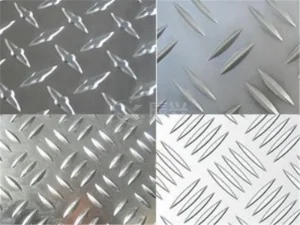
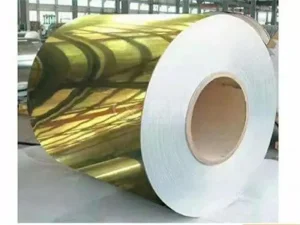
From highly reflective mirror coil finishes to protective mill-finished or embossed textures, we provide customized surfaces to improve corrosion resistance and optimize painting or laminating compatibility.
Built upon twenty years of engineering legacy, strict quality verification, and transparent global delivery logistics.
Continuous operational improvements, refinement of alloy processing techniques, and reliable production capacity.
Deep understanding of regional import certifications, shipping parameters, and international compliance standards.

Real-time batch trace codes linked to mill test certificates (MTC) detailing raw chemistry, mechanical properties, and tolerance deviations.

Engineered complaint resolution framework. Systematic root-cause reports provided in 8D layout format inside 24 working hours.
A technical breakdown of mechanical properties across our major commercial-grade aluminum alloys.
High-precision applications in aerospace, electronics, and food-grade packaging demand exact mechanical properties. A single deviation in yield strength or elongation can lead to structural failures or product losses on automated assembly lines. Our cold-rolling and hot-rolling mills utilize automatic gauge control (AGC) and online flatness verification systems to produce alloys within tight tolerance ranges.
| Alloy Grade | Primary Temper Options | Tensile Strength (MPa) | Yield Strength (MPa) | Standard Applications |
|---|---|---|---|---|
| 7075 Series | T6, T651, T73 | 510 - 570 | 430 - 500 | Aerospace engineering, precision molds, military defense assemblies |
| 3104 Series | H19, H24, H18 | 260 - 310 | 220 - 280 | Beverage cans, automotive radiator cores, corrosion-resistant housings |
| 3003 Series | O, H14, H24 | 140 - 180 | 110 - 150 | Cooking cookware, deep drawing components, chemical process containers |
| 1050 Series | O, H12, H14 | 65 - 95 | 20 - 75 | Electrical conductors, deep-drawn hollowware, heat sinks |
| 1235 / 8011 (Foil) | O, H18 | 80 - 125 | > 60 | Pharmaceutical blister packs, battery pack current collectors, aseptic food wrap |
Note: The properties listed above represent standard ranges. Customized tempers and chemical compositions can be adjusted to meet project-specific requirements.
Deploying our material solutions across major global industries requiring high reliability and performance.

Improves fuel efficiency in electric and commercial combustion vehicles through structural lightweighting. High-formability sheets for body-in-white structures.
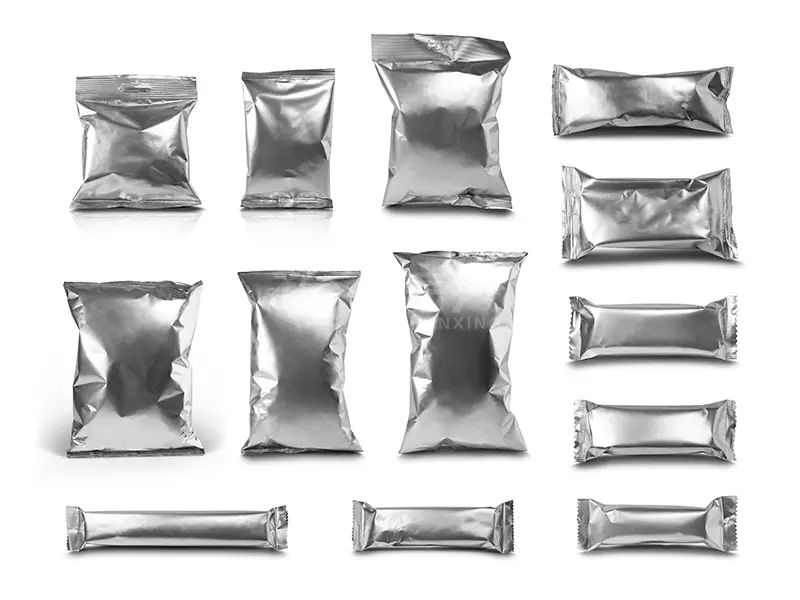
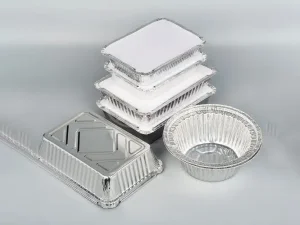
High-barrier foils and food-grade containers designed to preserve freshness, resist punctures, and meet strict FDA, LFGB, and EU hygiene regulations.

Offers superior thermal and electrical conductivity for heat sinks, battery current collectors, and electronic component housings.

Employs high-strength precipitation-hardened aluminum (such as 7000 and 2000 series alloys) to withstand severe mechanical stresses.

Provides long-term outdoor durability and structural integrity for architectural facades, roofing sheets, and structural frames.

Offers clean aesthetics and corrosion resistance for home appliances. Bright-finish, brushed, or embossed sheets styled for long-term use.
Enabling advanced manufacturing processes and digital supply chain visibility for global markets.
In response to changing international regulations like the EU's Carbon Border Adjustment Mechanism (CBAM) and rising energy costs, our factory operates on a clear development roadmap:
Partnering with our facility ensures your supply chain remains resilient, compliant with evolving environmental regulations, and backed by certified quality control documentation.
Ensuring compliance with international trade laws, environmental requirements, and quality control certifications.
Every shipment is accompanied by a mill test certificate (MTC) matching EN 10204 3.1 specifications. This includes full chemical element analyses (Fe, Si, Cu, Mn, Mg, Cr, Zn, Ti) and mechanical values for yield strength, tensile strength, and elongation.
All alloys conform to EU REACH and RoHS regulations. Packaging foils are manufactured in cleanroom conditions, complying with US FDA 21 CFR 178.3910 lubricants and EU No 10/2011 food-contact standards.
To help clients manage aluminum market price volatility, we offer structured procurement contracts. By utilizing hedging strategies on the London Metal Exchange (LME) and Shanghai Futures Exchange (SHFE), we secure fixed margins for long-term industrial projects.
Detailed metallurgical and logistical answers to help procurement managers make informed sourcing decisions.
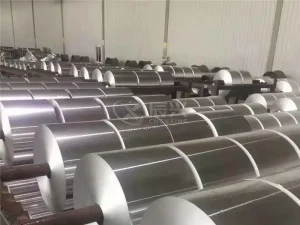
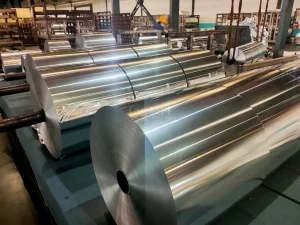
Our mills utilize automatic gauge control (AGC) systems paired with shape-measuring roll systems (such as Siemens or ABB flatness systems) to control foil thickness down to single-digit microns. Tension levelling processes are applied post-rolling to ensure uniform flatness, minimizing tear risks during high-speed printing or lamination lines.
3003 alloy is primarily an Al-Mn composition offering excellent formability, thermal transfer performance, and moderate strength. 3104 alloy adds magnesium (Mg), which increases tensile and yield strength through solid solution strengthening. This makes 3104 ideal for high-stress deep-drawn applications, such as beverage can bodies, where thinner walls are required without sacrificing structural integrity.
We source only high-purity ingots (exceeding 99.5% pure aluminum) for food-contact alloys. The rolling oils, surface lubricants, and anti-oxidant layers applied are non-toxic and compliant with FDA, LFGB, and REACH food packaging standards. Regular migration testing is conducted at third-party laboratories (such as SGS or TÜV SÜD) to ensure zero hazardous chemical transfer.
We utilize export-grade wooden packaging with robust internal barriers. Coils are wrapped in vacuum-sealed plastic films along with silica gel desiccant packs, followed by a layer of moisture-barrier paper. Steel strapping secures the load to sturdy wooden pallets to prevent shifting and friction wear inside the container during shipping.
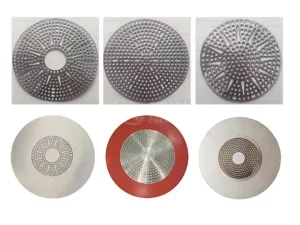
Extending our catalog with high-reflectivity mirror coils, high-purity circle slugs, and custom industrial coils.
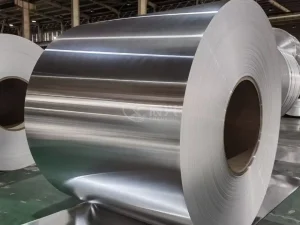
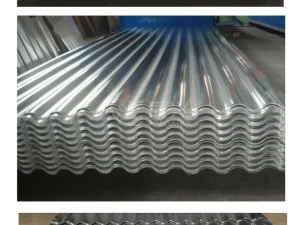
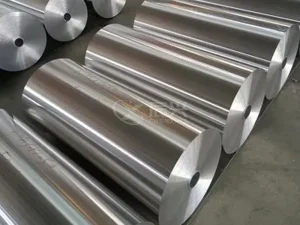
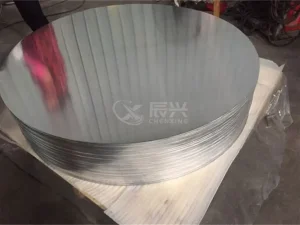
Analysis of macro-market updates, battery foil demand shifts, and global logistics trends.
International shipping of structural and packaging coils remains steady as automotive manufacturers ramp up lightweight material sourcing.
More news →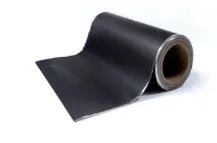
The expansion of solid-state and LFP lithium battery gigafactories has increased requirements for ultra-thin 9µm to 12µm current collector foils.
More news →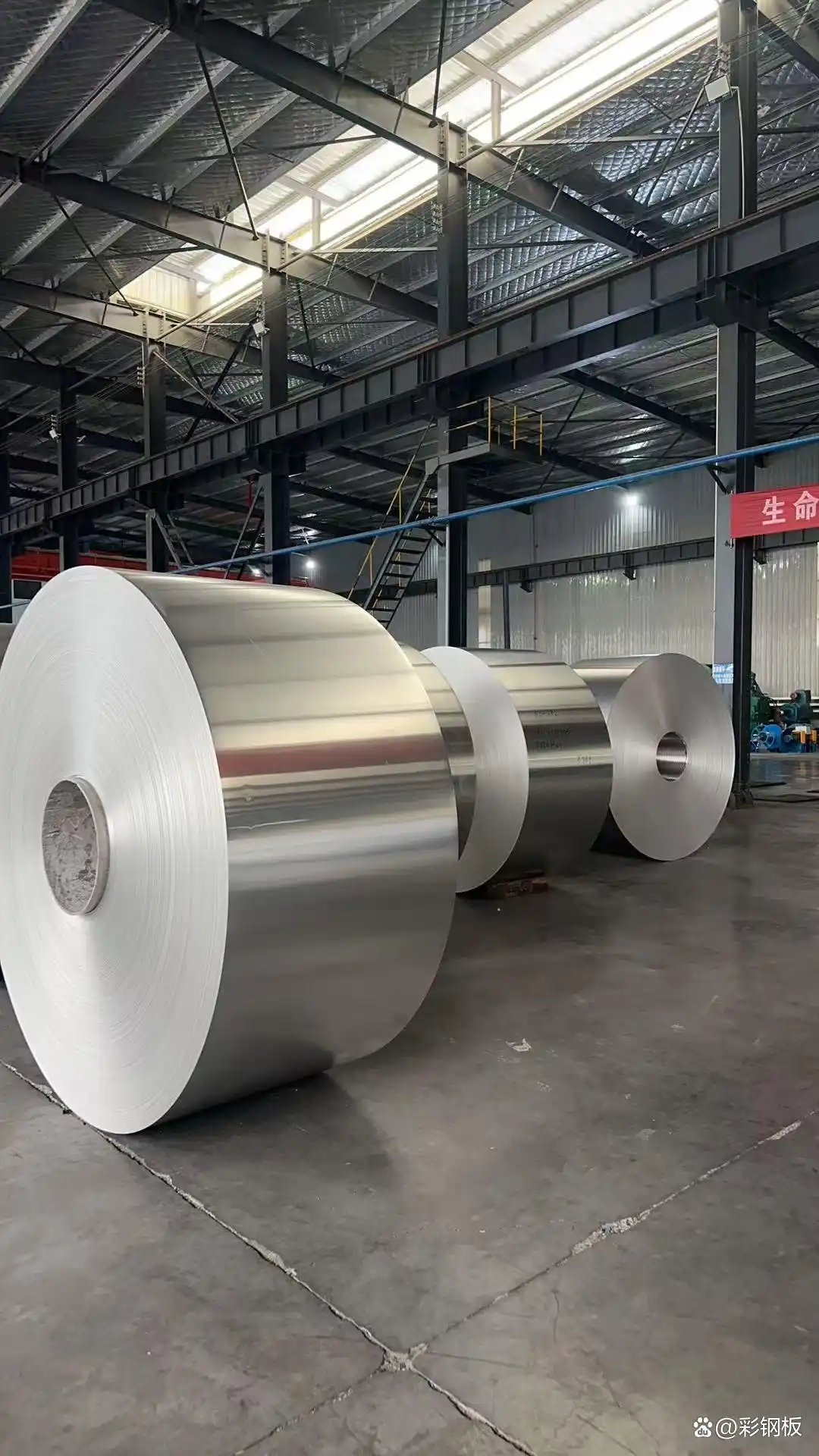
Low-carbon aluminum materials are seeing increased adoption in building facades and structural roofing sheets due to ESG directives.
More news →Speak directly with our metallurgical engineers to discuss your alloy specifications, dimensions, shipping tolerances, and custom packaging requirements.
For inquiries about our products or pricelists, please connect with us and we will respond within 24 hours.
Submit Inquiry Now