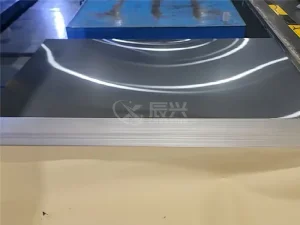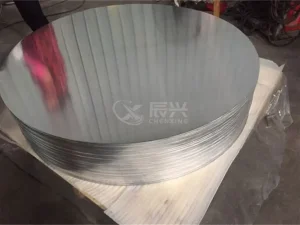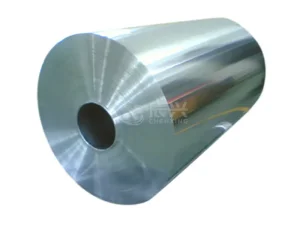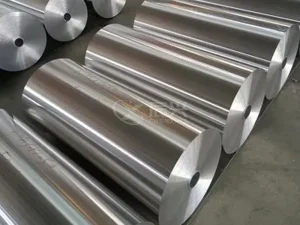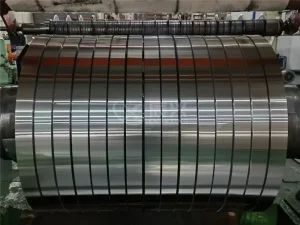
Explore our core manufacturing line of industrial-grade aluminum sheets, foils, and specialized battery-grade components.
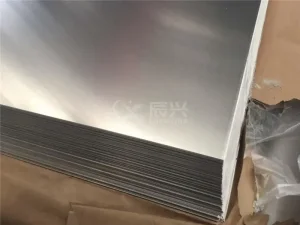
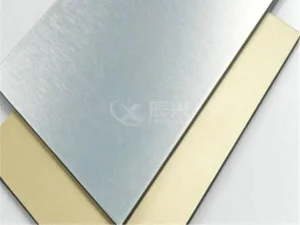
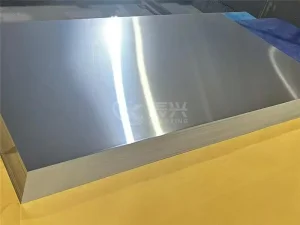
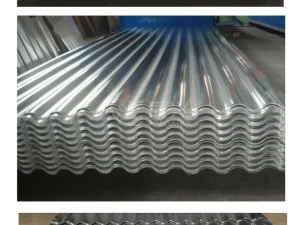
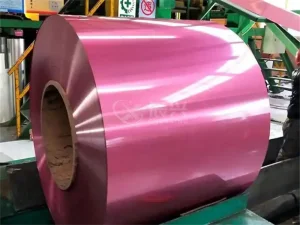
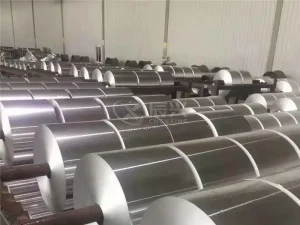
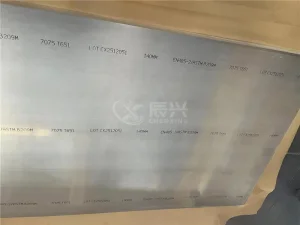
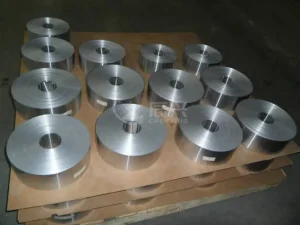
Engineered performance that fuels the global energy transition with proven compliance, scale, and delivery reliability.
In the rapidly evolving battery technology landscape, the choice of the cathode current collector plays a critical role in determining cell performance, safety, and cycle life. Battery Aluminium Foil serves as the backbone of the lithium-ion and sodium-ion battery industries. As a premier battery aluminium foil manufacturer and factory, we produce ultra-thin, highly conductive, and defect-free aluminum foil engineered to withstand aggressive electrochemical environments. This whitepaper details the structural dynamics, technical roadmaps, chemistry compatibility, and quality control systems essential for modern Gigafactory procurement.
Information Gain Insight: The shift toward high-nickel chemistries (such as NCM 811) and high-voltage operations demands aluminum foil with minimal trace element contamination. Even trace copper (Cu) or iron (Fe) impurities exceeding 10 ppm can cause micro-dendrite growth, leading to internal short circuits and thermal runaway.
Aluminium is selected for the positive electrode (cathode) current collector because it exhibits excellent electrochemical stability at high positive potentials. Under typical battery charging voltages (up to 4.2V - 4.5V vs. Li/Li⁺), aluminum forms a micro-thin, dense passivation layer of aluminum oxide (Al₂O₃) on its surface. This layer prevents further electrolyte reaction and metal dissolution. Conversely, at low potentials (below 0.6V vs. Li/Li⁺), aluminum undergoes alloying with lithium (lithiation), which is why copper is traditionally used at the anode. However, in emerging Sodium-Ion Battery (SIB) technologies, sodium does not alloy with aluminum at low potentials, allowing manufacturers to use cost-effective aluminum foil for both the cathode and the anode.
Standard industrial foils are not suitable for high-density power applications. Battery-grade foil requires precise control over mechanical properties, surface tension (Dyne level), thickness uniformity, and thermal characteristics. Below are the benchmark metrics that define our manufacturing capability:
| Parameters | Standard Battery Foil (12-15μm) | Ultra-Thin Battery Foil (8-10μm) | Carbon-Coated Battery Foil (9-15μm) |
|---|---|---|---|
| Alloy Composition | 1060 / 1070 / 1235 | 1070 / 1235 / Modified 3003 | 1060 / 1070 / 1235 (Substrate) |
| Tensile Strength (MPa) | 180 - 240 | 200 - 260 | 190 - 250 |
| Elongation (%) | ≥ 1.5 - 2.5 | ≥ 1.2 - 2.0 | ≥ 1.5 - 2.5 |
| Dyne Level (mN/m) | ≥ 32 | ≥ 34 | ≥ 38 (Excellent Wetting) |
| Pinhole Count | < 5 per m² | < 15 per m² | Virtually zero (Covered by coating) |
The driving force in electric vehicle (EV) battery development is volumetric and gravimetric energy density. Down-gauging foil thickness from 15μm to 12μm, 10μm, and eventually 8μm increases active material packing space and reduces inactive weight. However, thinning the foil lowers its mechanical strength, making it vulnerable to breakage during continuous roll-to-roll slot-die coating processes. As a leading factory, we have engineered custom thermal treatment steps and modified chemical formulations (introducing controlled trace elements) to achieve a tensile strength exceeding 200 MPa at 9μm thickness, maintaining high coating line tensions without structural failure.
Direct contact between active cathode material particles and flat aluminum foil creates contact resistance. Applying a thin sub-micron (0.5 - 1.0 μm) carbon coating (conductive carbon black or graphene) to the foil surface introduces several advantages:
Due to the abundance and low cost of sodium raw materials, Sodium-ion batteries are scaling rapidly for stationary energy storage systems (ESS) and light electric vehicles. Since sodium does not alloy with aluminum at low potentials, the anode copper foil (which represents a major portion of battery material costs) is entirely replaced with aluminum foil. This change doubles the volume of aluminum foil consumed per cell, representing a massive market opportunity for high-volume factories capable of meeting tight cost targets.
Our manufacturing processes are fine-tuned to accommodate diverse battery chemistries. Different cell designs demand distinct surface properties:
Our Chinese manufacturing facility operates on digitalized Factory 4.0 principles. The fabrication of high-end battery foil involves hot rolling, cold rolling, foil rolling, heat treatment, and precision slitting.
Our rolling mills are equipped with state-of-the-art Automatic Gauge Control (AGC) and Automatic Flatness Control (AFC) systems. Using laser-based flatness meters and X-ray thickness measurement sensors, our equipment automatically adjusts roller pressure in real time. This keeps thickness tolerances to within $\pm 0.1\mu\text{m}$.
We enforce strict cleanroom controls in our slitting and packing zones. Micro-dust particles settling on foil surfaces can cause cell self-discharge or short circuits. Our packaging processes include vacuum sealing and desiccant placement within impact-resistant wooden boxes. This preserves the surface chemistry and Dyne level during long ocean voyages.
Our high-performance aluminum solutions serve a wide range of global industries, from commercial aerospace to household electronics.
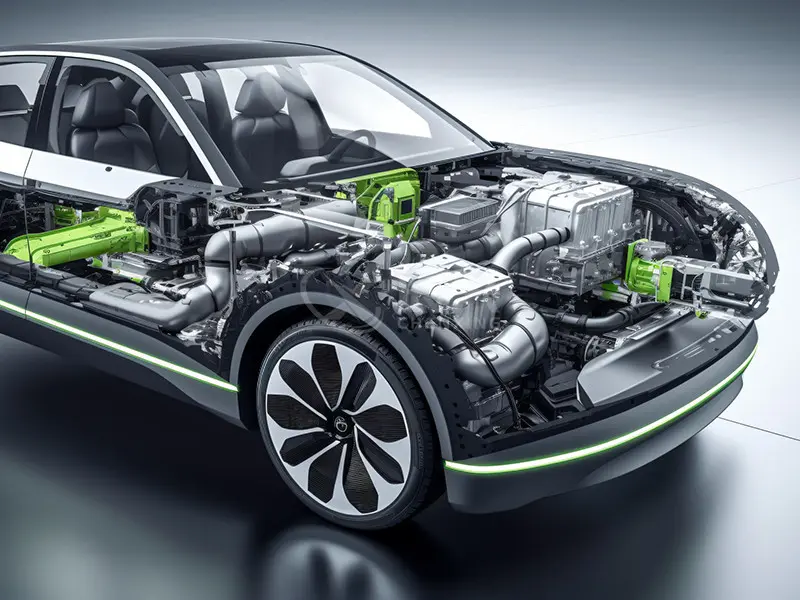
High-strength sheets and extrusions engineered to reduce vehicle weight, improve fuel efficiency, and enhance structural crash safety in EVs and commercial fleets.
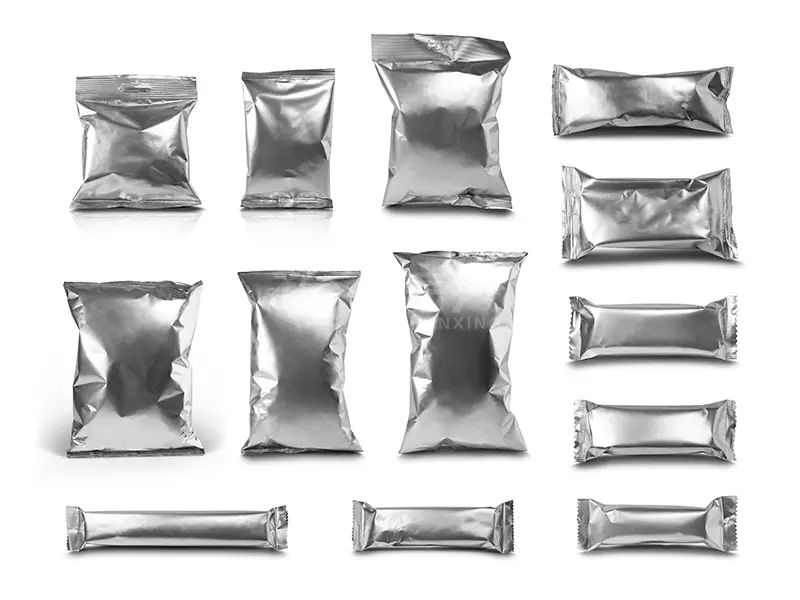
High-barrier, food-safe foils and sheets designed to preserve freshness, resist moisture, and support highly recyclable structural food and pharma packaging.

Thermal management solutions, capacitor casings, and thin foils built to meet tight tolerances, optimize heat dissipation, and maximize electrical conductivity.

Premium 2xxx and 7xxx series structural alloys, offering high strength-to-weight ratios and crack resistance under extreme temperatures and pressures.
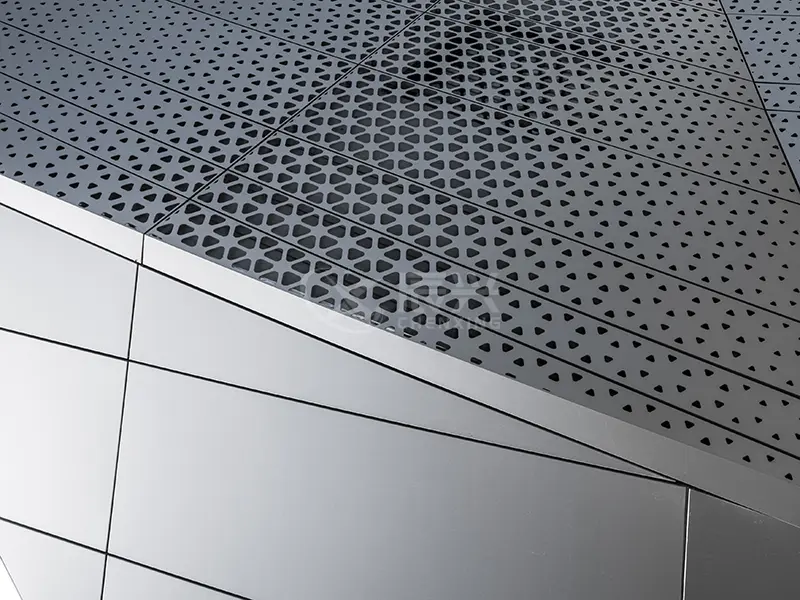
Weather-resistant sheets and architectural claddings engineered for durability, modern facade aesthetics, and low-maintenance structural life cycles.

Pre-painted, brushed, and mirror-finished panels designed for structural integrity and high aesthetic quality in premium consumer home appliances.
Procuring battery-grade raw materials requires strict quality standards to ensure battery safety and performance. Buyers from international automotive groups, tier-1 cell companies, and energy storage system manufacturers use structured checklists during factory audits:
During the slitting process, the blade must be aligned to minimize edge burrs. Burrs taller than 2μm can rupture separator membranes under compression, leading to internal short circuits and cell failure. Our factories use dynamic online shear systems and tungsten carbide circular blades to maintain burr heights below 1.5μm, ensuring clean slit edges.
Traces of rolling oil on the foil surface interfere with active materials and cause poor slurry wetting. We subject all battery foils to thermal degreasing steps. This process reduces surface oil residues to less than 15 mg/m², ensuring optimal coating adhesion and preventing chemical reactions inside the cell.
The presence of trace metals like copper (Cu), iron (Fe), nickel (Ni), and chromium (Cr) must be kept below strict PPM (parts per million) limits. High concentrations of metallic impurities can dissolve in the electrolyte during charging and deposit on the anode as metallic dendrites, compromising safety. We use continuous raw-material sorting and high-purity aluminum ingots to guarantee stable alloy composition.
Navigating international trade laws, customs duties, anti-dumping regulations, and logistics is essential for modern supply chains. Our team offers global support, including customs clearance assistance, anti-dumping duty planning, and duty-paid (DDP/CIF) logistics solutions. We work with local warehouse networks in Europe, North America, and Southeast Asia to maintain buffer stocks for key accounts. This prevents factory downtime caused by global shipping delays.
Answers to technical and commercial questions about battery aluminum foil sourcing and production.
Stay updated on aluminum manufacturing trends, market dynamics, and global supply chain updates.
Get in touch with our engineering and procurement team for custom specifications, volume pricing, and standard sample test rolls. We reply within 24 hours.
Submit Request NowDirect factory access to specialized industrial, architectural, and commercial aluminum foils and sheets.