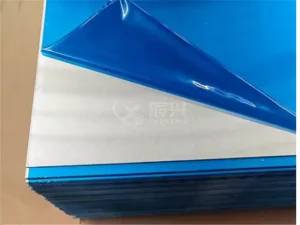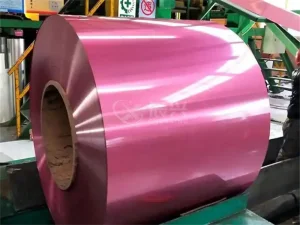
Engineered to exact international standards with guaranteed structural performance and microstructural uniformity.
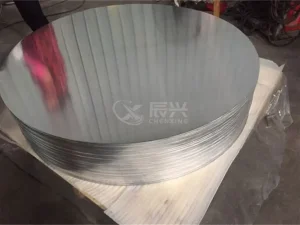
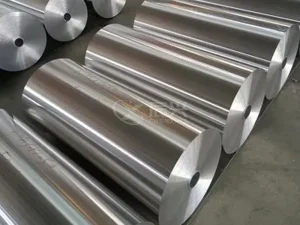
Authoritative analysis of alloy metallurgy, manufacturing parameters, and strategic sourcing mechanisms.
In global industrial manufacturing, selecting the right aluminium sheet roll manufacturer is a complex engineering and procurement decision. Aluminium sheet rolls, processed through hot rolling (DC) or continuous casting (CC), serve as structural pillars for high-performance fields like aerospace structures, automotive outer panels, lithographic plates, food packaging, and advanced lithium-ion battery casings. Achieving the optimal balance of mechanical properties, yield strength, surface quality, and microstructural uniformity requires deep control over metallurgical processes, rolling reductions, and heat treatments.
For modern engineering projects, buying aluminium sheet rolls involves navigating complex alloy profiles, precise temper designations, and rigorous dimensional tolerance specifications. Sourcing from experienced manufacturers who understand the interplay of chemical composition limits and process parameters ensures structural stability, forming predictability, and overall cost efficiency. This deep-dive whitepaper addresses critical purchasing considerations, process standards, and technical methodologies necessary for engineering managers and procurement directors.
Our mills maintain strict control over recrystalization behavior and grain size. This structure ensures isotropic mechanical performance, minimizing planar anisotropy which leads to defects like "earing" during complex stamping, deep drawing, and forming operations.
Utilizing high-resolution inline surface inspection cameras and laser scanners, we eliminate surface non-conformities such as roll marks, carbonized grease staining, pinholes, and edge cracking before the coil reaches the packaging stage.
A manufacturing plant's raw material integrity dictates the final material performance of the roll. Small variations in trace elements can significantly alter structural behaviors. Below is a reference of common industrial alloys and target mechanical configurations supplied globally:
| Alloy Series | Common Tempers | Tensile Strength (MPa) | Yield Strength (MPa) | Elongation (%) | Primary Industrial Applications |
|---|---|---|---|---|---|
| 1xxx (e.g., 1050/1060/1100) | O, H14, H18, H24 | 65 - 145 | 25 - 125 | 5 - 35 | Chemical processing equipment, HVAC fins, deep drawing spun cookware, capacitors. |
| 3xxx (e.g., 3003/3105) | O, H14, H24, H18 | 110 - 200 | 40 - 180 | 4 - 30 | Automotive heat shields, heat exchangers, roofing sheets, customizable containers. |
| 5xxx (e.g., 5052/5083/5754) | O, H32, H34, H111 | 190 - 345 | 80 - 280 | 10 - 25 | Marine hulls, automotive inner structures, pressure vessels, chemical tankers. |
| 6xxx (e.g., 6061/6082) | T4, T6, T651 | 180 - 310 | 90 - 276 | 8 - 18 | Structural framing, architectural facade systems, land transport chassis components. |
| 7xxx (e.g., 7075) | T6, T651 | 530 - 570 | 460 - 500 | 5 - 11 | Aerospace structural ribs, mold tooling, highly stressed defense components. |
Combining automated systems with strict quality control to guarantee consistent material execution.
Under modern smart manufacturing initiatives, our manufacturing footprint is driven by Industry 4.0 integration. This smart network links the entire production sequence, from melting and hot rolling to cold rolling, annealing, finishing, and packaging. Rather than operating as isolated steps, each stage is managed by an integrated MES (Manufacturing Execution System) and ERP system that adjusts process variables in real time based on feedback from advanced sensors.
This automated flow begins in our casting house. Liquid aluminum purity is maintained through electromagnetic filtration and inline degassing systems that remove dissolved hydrogen gas and non-metallic inclusions. During hot rolling, computer-controlled AGC (Automatic Gauge Control) and AFC (Automatic Flatness Control) systems continuously measure thickness and profile deviations, adjusting roll gap cylinders to maintain tight tolerances across the entire length of the coil.
Using hydraulic cylinder adjustments alongside thickness gauges, our cold rolling lines maintain thickness tolerances within ±1% of nominal specifications.
Our continuous annealing lines use automated cooling controls to prevent grain growth, resulting in uniform mechanical properties throughout the coil.
High-speed laser scanners detect and log flat shape deviations across the width of the sheet, ensuring consistent flat sheets that run smoothly on your stamping press lines.
This automated approach directly builds supply chain resilience. Real-time scheduling tools optimize rolling schedules based on energy costs and production line workloads. Machine sensors predict maintenance needs before issues occur, preventing unexpected downtime and keeping production runs on schedule. Integrating these digital tools enables us to offer reliable delivery windows, consistent batch quality, and complete digital traceability for critical engineering projects.
Tailored metallurgical and structural solutions designed for challenging operational environments.
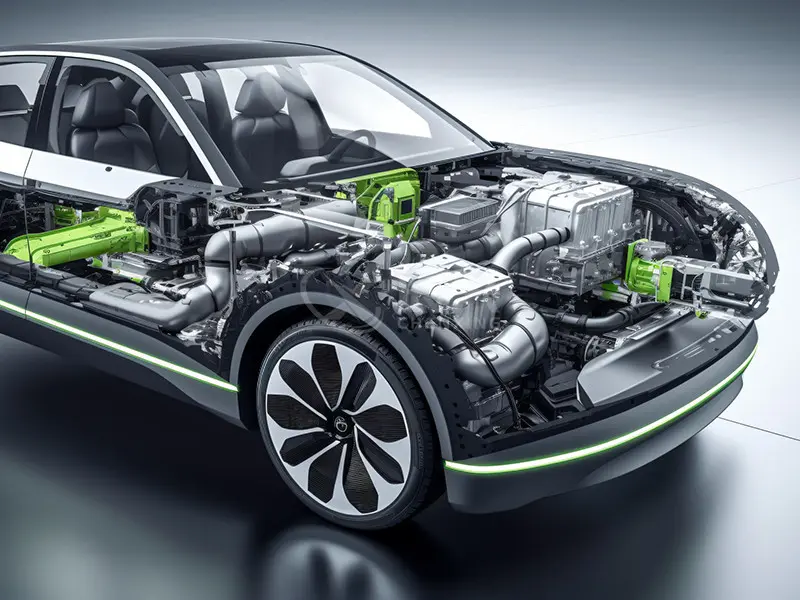
For EV battery enclosures, crash structures, and body panels, we supply 5xxx and 6xxx series alloys with controlled work hardening and bake-hardening responses to maximize structural safety and weight savings.
Delivering high-thickness 7075 and 6061 plates with minimal residual stress. Controlled stretching (T651 temper) ensures structural stability during complex machining processes, avoiding part deformation.
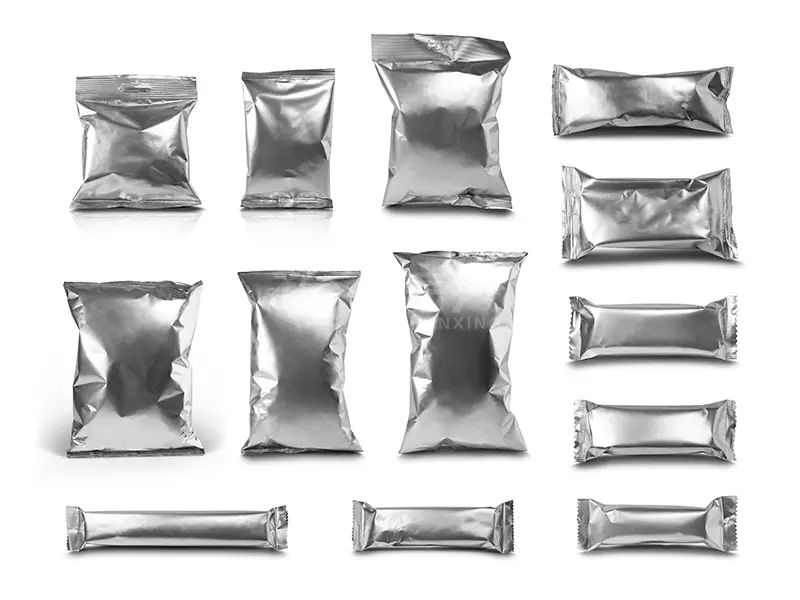
Supplying fully degreased, sterile, food-grade 8xxx and 3xxx series aluminum foils and sheets. Surface cleanliness and pinhole-free structures guarantee barrier performance for sterile packaging applications.
Providing high-purity current collector foils and specialized brazing clad sheets with superior thermal conductivity, enabling long-term efficiency in demanding thermal transfer applications.
Specialized polyester (PE) and PVDF pre-painted aluminum coils. These coating systems offer excellent UV resistance, color retention, and salt-spray corrosion protection for long-lasting exterior designs.
Alloy plates with high internal density, free of microscopic voids or porous regions. Ideal for vacuum tables, high-pressure polyurethane molds, and precise plastic injection tooling plates.
Developing low-carbon alloys and closed-loop recycling systems to support global decarbonization.
Environmental standards are reshaping the global metallurgical supply chain. With regulations like the EU's Carbon Border Adjustment Mechanism (CBAM) and strict Scope 3 emissions reporting, buying aluminium rolls now requires checking carbon footprint data along with physical mechanical specs. Our technology roadmap focuses on reducing carbon footprint while maintaining high structural performance.
To reduce environmental impact, our mills focus on two main areas:
Our research and development team is also working on next-generation alloys. We are designing thinner packaging foils with high puncture resistance, and developing automotive sheets that improve formability while lowering weight. Sourcing your aluminum from a manufacturer with a clear sustainability plan helps future-proof your product lines and supports global environmental goals.
Managing the complexities of international trade and supply chain logistics with complete reliability.
International sourcing requires managing trade rules, anti-dumping duties, and global shipping setups. A reliable manufacturing partner provides more than just high-quality metal; they also need to handle complex customs procedures, shipping options, and regional compliance standards.
To keep shipping operations reliable and costs predictable, our team focuses on three main areas:
High-grade aluminum alloys engineered for demanding operational environments.



Stay updated on key developments in aluminum processing, energy costs, and international trade.
Answers to common technical questions about sourcing aluminum sheet rolls globally.
DC (Direct Chill) rolls are hot-rolled from cast ingots, offering high surface quality, uniform grain structure, and excellent formability for deep drawing or anodizing. CC (Continuous Casting) rolls bypass the ingot stage, making them cost-effective for general structural uses, roofing, and standard fabrication.
We pack coils securely using multi-layer protection: VCI anti-corrosion film, desiccants, heavy kraft paper, and metal edge protectors, all secured to heavy wooden pallets. This barrier setup protects the metal from moisture, ocean salt air, and temperature swings during transit.
Our high-speed cold rolling mills use online AGC (Automatic Gauge Control) systems to maintain foil thickness tolerances down to ±1% for battery foils and thin-gauge materials, ensuring uniform performance for automated unwinding and forming lines.
Alloy 1050 or 3003 in soft temper (O-temper) is typical for deep drawing. We control grain growth and temper conditions to prevent "earing" during forming, which reduces scrap rates and helps you maintain consistent, clean shapes.
Every shipment is tracked by a unique coil ID code, linked to its casting batch, rolling data, and heat treatment logs. We provide full Mill Test Certificates (MTC) matching EN 10204 3.1, and use an 8D problem-solving process to resolve any technical issues within 24 hours.
Yes, we process coils to custom slit widths from 10mm up to 2600mm. We also operate continuous roll coating lines that apply polyester (PE) or PVDF coatings to meet specific architectural and industrial exterior specifications.
Share your required alloy series, temper, thickness, width, and annual usage, and our metallurgical team will provide a comprehensive quote within 24 hours.
Premium aluminum options designed for demanding architectural, structural, and chemical environments.