
Buy Solid Aluminum Panel Manufacturers, Factories

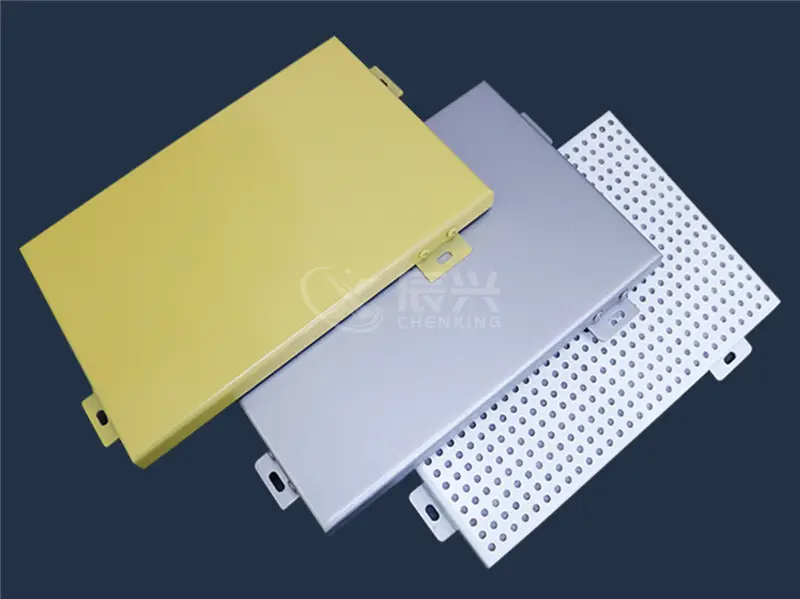
Solid aluminum panel  also called Aluminum Veneer or Aluminum Panel ,which is a high-performance flat aluminum product made of pure aluminum (1xxx series) or aluminum alloys (3xxx, 5xxx, 6xxx series) through processes like hot rolling, cold rolling, and precision cutting. It features a dense solid structure, distinguishing it from hollow aluminum profiles or composite panels.

Product Description

Key Manufacturing Process
The production of aluminum roofing sheets involves precise process control to ensure thickness uniformity, surface quality, and performance stability. The main steps are as follows:
1

Raw Material Selection

High-quality aluminum ingots or alloy billets (typically 1xxx, 3xxx, or 5xxx series) are selected based on the intended application. For example, 5xxx series (Al-Mg alloy) is preferred for coastal areas due to its superior corrosion resistance.
2

Hot Rolling

The aluminum billets are heated to 400-500°C and rolled into thick sheets (1-5mm) using hot rolling mills. This step refines the grain structure and improves the material's formability.
3

Cold Rolling

The hot-rolled sheets are further rolled at room temperature to reduce the thickness to the target range (0.2-1.2mm for roofing applications). Cold rolling enhances the sheet's strength, surface smoothness, and dimensional precision.
4

Surface Treatment

Coating: PVDF (fluorocarbon) coating, polyester coating, or acrylic coating is applied via roller coating to improve weather resistance and aesthetics. PVDF coating is the premium option for harsh environments.
5

Anodizing

The sheets are treated with electrolysis to form a thicker oxide film (5-20 μm) on the surface, enhancing corrosion resistance and allowing for dyeing into various colors.
6

Embossing & Cutting

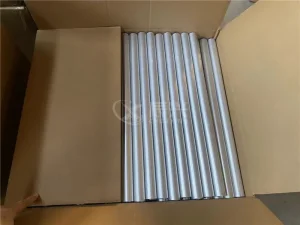
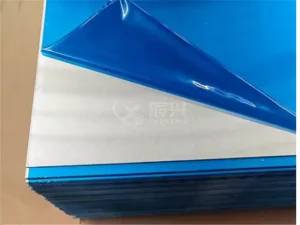
The sheets are passed through embossing rolls to create decorative patterns, which also improve slip resistance and hide minor surface defects. The treated sheets are then cut into standard sizes (e.g., 1000mm × 2000mm, 1220mm × 2440mm) or custom lengths. They are packaged with moisture-proof film and cardboard to prevent scratches during transport.
Key Specifications
Specification Category Detailed Parameters Typical Alloys Typical Applications Quality Control Requirements
Thickness Thin: 0.2mm - 0.5mm 1060, 3003 Residential awnings, small sheds, temporary buildings Thickness deviation ≤ ±0.02mm, no pinholes
Medium: 0.5mm - 0.8mm 3003, 5052 Residential roofs, commercial buildings (shops, offices), agricultural greenhouses Thickness deviation ≤ ±0.03mm, tensile strength ≥ 150MPa
Thick: 0.8mm - 1.2mm 5052, 5083 Industrial workshops, large-span buildings, coastal area roofs Thickness deviation ≤ ±0.04mm, elongation ≥ 5%
Surface Treatment PVDF Coated 3003, 5052 Coastal buildings, high-end commercial buildings, industrial areas Coating thickness 20-30 μm, weather resistance ≥ 20 years
Polyester Coated 1060, 3003 Residential roofs, inland commercial buildings Coating thickness 15-25 μm, weather resistance ≥ 10 years
Anodized/Embossed 1060, 3003 Decorative roofs, awnings, cultural buildings Anodized film thickness 8-15 μm, pattern uniformity
Size (Width × Length) Standard Size: 1000mm × 2000mm, 1220mm × 2440mm, 1250mm × 3000mm 1060, 3003, 5052 Batch construction of residential and commercial buildings Size deviation ≤ ±5mm, flat surface without waves
Custom Size: Width 500-1500mm, Length up to 6000mm 3003, 5052, 5083 Special-shaped roofs, large-span industrial buildings No creases, surface scratch depth ≤ 0.01mm
Alloy Types 1xxx Series (1060, 1100) 1060 (99.6% Al) Indoor awnings, temporary buildings, decorative roofs Good corrosion resistance, low strength
3xxx Series (3003) 3003 (Al-Mn) Residential roofs, commercial buildings, agricultural greenhouses Enhanced strength vs. 1xxx, excellent weldability
5xxx Series (5052, 5083) 5052 (Al-Mg), 5083 (Al-Mg-Mn) Coastal buildings, industrial workshops, high-wind areas Superior corrosion resistance, high tensile strength
Detail Images
Aluminum Roofing Sheet Detail 1
Detail 1
Aluminum Roofing Sheet Detail 2
Detail 2
Aluminum Roofing Sheet Detail 3
Detail 3
Frequently Asked Questions (FAQ)
1. Which aluminum alloy series is best for coastal building roofs?
The 5xxx series (such as 5052 or 5083 Al-Mg alloys) is highly recommended for coastal environments due to its superior resistance to salt spray and corrosion compared to the 1xxx or 3xxx series.
2. What is the difference between PVDF and Polyester (PE) coatings?
PVDF coating offers premium weatherability with a lifespan of 20+ years, making it ideal for harsh industrial and coastal environments. Polyester coating is more economical, offering a weather resistance of 10+ years, suitable for inland residential and commercial buildings.
3. How does thickness affect the performance of aluminum roofing sheets?
Thinner sheets (0.2mm - 0.5mm) are lightweight and suitable for residential awnings or temporary structures. Medium thickness (0.5mm - 0.8mm) works well for standard residential and commercial roofs. Thick sheets (0.8mm - 1.2mm) offer the highest structural strength and are preferred for large-span industrial workshops or high-wind environments.
4. Why should I choose anodized or embossed aluminum sheets?
Anodizing provides an electrolytic oxide film that increases corrosion protection and allows for beautiful dyed finishes. Embossing adds decorative patterns, improves slip resistance, and helps mask minor surface scratches or manufacturing defects.
5. Can I order custom sizes for large-scale projects?
Yes, custom sizes are available. While standard widths are 1000mm, 1220mm, and 1250mm, custom widths can range from 500mm to 1500mm, and lengths can extend up to 6000mm to fit specific large-span industrial buildings.

Related Products