



Executive Whitepaper: 6061 Aluminum Plate Sourcing, Mechanical Processing, and Global Industrial Frameworks
In the high-performance alloy industry, 6061 aluminum plate is a cornerstone for engineering, architectural, and aerospace sectors. As structural engineering demands increase globally, finding reliable China 6061 plate manufacturers requires an understanding of metallurgical specifications, heat treatment processes, and global supply chain dynamics. This industry whitepaper outlines the structural parameters of 6061-T6 and T651 aluminum plates, detailing manufacturing methods, industry standards, procurement systems, and quality control frameworks that define leading production facilities.
1. The Metallurgical Blueprint of 6061 Alloy
6061 is a precipitation-hardened aluminum alloy containing magnesium (Mg) and silicon (Si) as its primary alloying elements. The correct distribution of these elements produces Magnesium Silicide (Mg₂Si), the compound responsible for the alloy's strength during heat treatment. A high-quality manufacturer must control impurity levels, particularly iron (Fe), copper (Cu), and zinc (Zn), to maintain fracture toughness and prevent premature stress corrosion cracking.
| Element | Silicon (Si) | Magnesium (Mg) | Copper (Cu) | Iron (Fe) | Chromium (Cr) | Zinc (Zn) | Titanium (Ti) | Aluminum (Al) |
|---|---|---|---|---|---|---|---|---|
| % Content | 0.40 – 0.80 | 0.80 – 1.20 | 0.15 – 0.40 | Max 0.70 | 0.04 – 0.35 | Max 0.25 | Max 0.15 | Remainder |
Controlling these elements determines the success of subsequent heat treatments. If the silicon-to-magnesium ratio is unbalanced, excess silicon can cause localized brittleness, while excess magnesium can reduce the alloy's response to artificial aging. Our manufacturing process uses automated spectral analysis to ensure each melt charge matches ASTM B209 and EN 485 standards.
2. T6 vs. T651 Temper: Relieving Residual Stresses
Understanding the difference between the T6 and T651 tempers is essential for precise component manufacturing:
- T6 Temper: Solution heat-treated and artificially aged. While this temper achieves high yield strength (typically ≥ 276 MPa), the rapid water quenching process can introduce significant internal residual stresses. When subjected to asymmetrical CNC machining, T6 plates may warp, twist, or shift dimensions, causing tool wear and rejected parts.
- T651 Temper: Solution heat-treated, stress-relieved by stretching a controlled percentage (1.5% to 3%), and then artificially aged. This stretching process redistributes and reduces residual stresses. A T651 plate maintains its flatness and dimensional tolerances during extensive machining, making it suitable for semiconductor vacuum chambers, mold manufacturing, and precision fixtures.
3. Technical Specifications & Mechanical Performance Metrics
The mechanical properties of 6061 aluminum plates depend on thickness, heat profile, and quenching consistency. Below are the mechanical properties required for heavy-duty structural engineering:
| Property | 6061-O (Annealed) | 6061-T4 | 6061-T6 / T651 |
|---|---|---|---|
| Tensile Strength (MPa) | ≤ 150 | ≥ 180 | ≥ 290 (typically 310) |
| Yield Strength (MPa) | ≤ 95 | ≥ 110 | ≥ 240 (typically 276) |
| Elongation (%) | ≥ 16 | ≥ 16 | ≥ 9 (typically 12 - 15 for thin plates) |
| Brinell Hardness (HBW) | 30 | 65 | 95 |
| Thermal Conductivity (W/m·K) | 180 | 154 | 167 |
4. Global Procurement Needs & Strategic Supply Chains
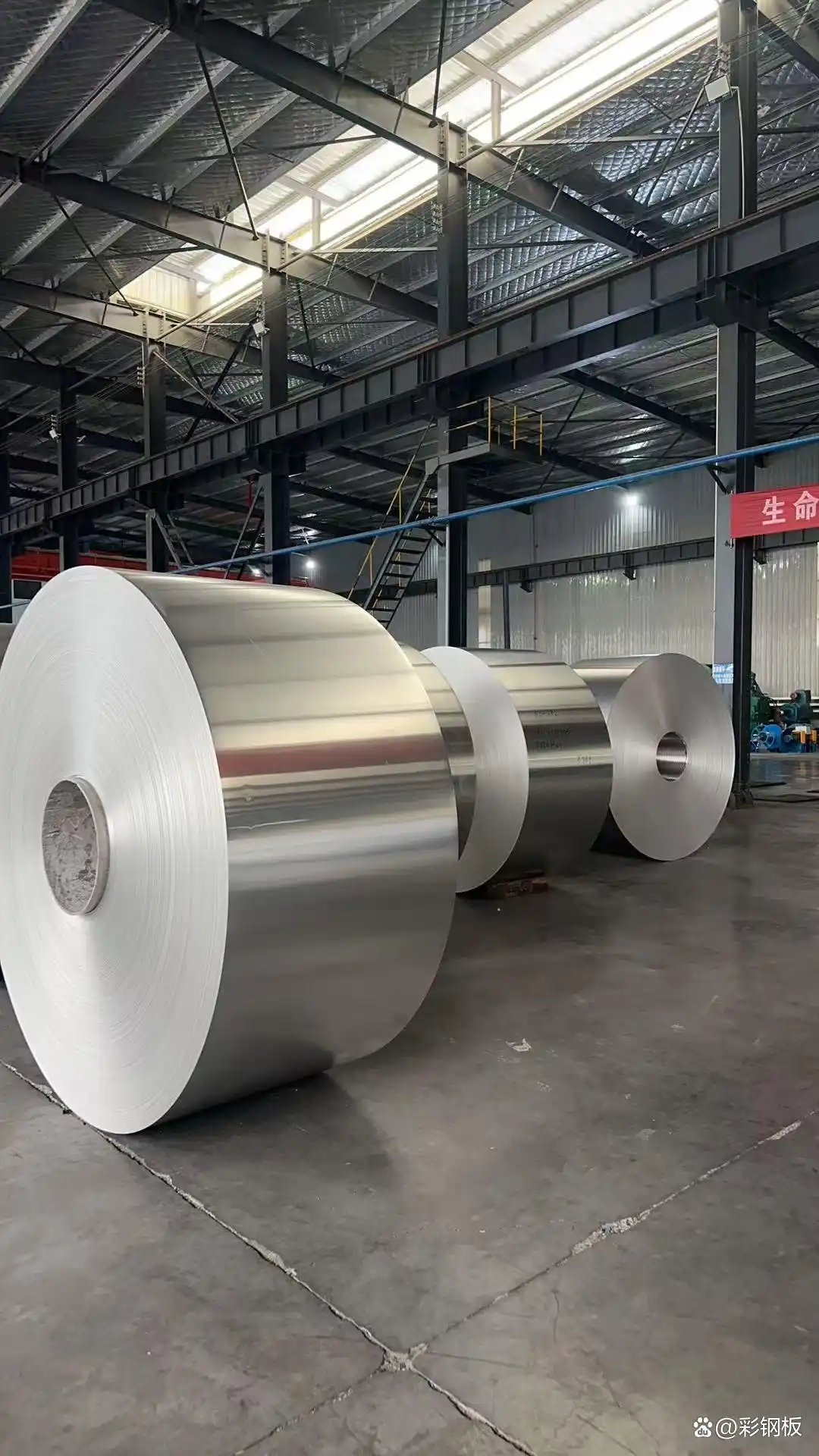
Purchasing agents and global supply chain directors must balance quality, logistics cost, and lead-time predictability. Sourcing 6061 aluminum plates from China offers access to raw materials and large-scale manufacturing infrastructure. However, high-volume procurement requires verification of several key operational processes:
Flatness Tolerances & Surface Protection
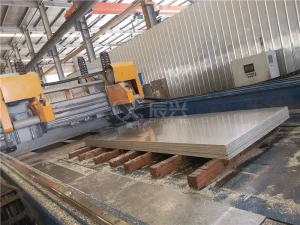
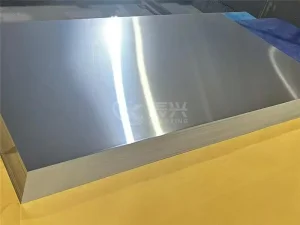
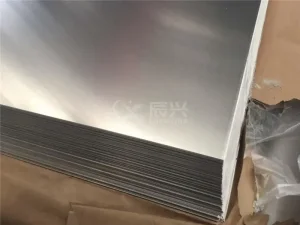
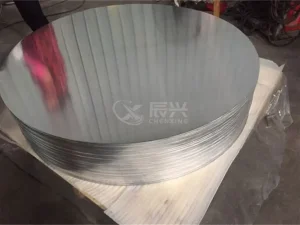
Large plates used in precision machinery tables require strict flatness control. Leading Chinese factories utilize tension levelers and precision roller straighteners to achieve flatness deviations below 3mm over a 3000mm length. Surface protection is maintained using double-sided PE protective film or neutral interleaving paper to prevent surface abrasion during maritime transit.
Traceability and Quality Control Standards
Procuring raw materials requires verification at every stage of production. Quality manufacturers supply a Mill Test Certificate (MTC) matching EN 10204 3.1, detailing chemical composition, tensile testing, hardness measurements, and ultrasonic test results. Implementing an 8D problem-solving protocol ensures that any deviations are corrected, root causes are identified, and corrective actions are documented within 24 to 48 hours.
5. Future Roadmap & Green Manufacturing (ESG Compliance)
The global aluminum industry is transitioning toward carbon neutrality. Forward-looking manufacturers are updating processing equipment to reduce emissions and decrease energy consumption per ton of finished product:
- Recycled Scrap Aluminum Systems: Integrating closed-loop recycling programs where clean industrial 6061 scrap is collected and remelted, reducing energy consumption by up to 95% compared to primary smelting.
- Regenerative Burner Technology: Utilizing high-efficiency natural gas burners in melting furnaces to minimize greenhouse gas emissions.
- Eco-Friendly Surface Pretreatments: Eliminating hexavalent chromium in cleaning and anodizing processes to align with EU REACH and RoHS regulations.