The global aluminium foil market is expanding across food packaging, pharmaceuticals, household use, and technical applications. Buyers now evaluate more than price. They examine alloy consistency, foil gauge, surface quality, production capacity, and delivery reliability.
Recent data from the U.S. Geological Survey indicates that global aluminium smelter production exceeded 70 million metric tons in 2023. This large upstream base supports a complex downstream supply chain, including foil rolling, slitting, coating, and packaging conversion. The International Aluminium Institute also reports continued growth in aluminium demand, driven partly by lightweight packaging and recyclable material systems. However, aluminium output does not equal foil availability. Regional rolling capacity, energy costs, and export infrastructure still influence real purchasing options.
This guide examines leading manufacturers from a global buyer’s perspective. It considers certifications, alloy ranges, typical thicknesses, monthly capacity, export experience, and quality-control practices. Details such as edge trimming, pinhole inspection, and core dimensions can affect production results. Small defects matter.
Industry market reports often publish different growth forecasts. Their definitions, regions, and product categories are not always identical. That limitation deserves attention. A supplier may appear large in one ranking but have limited experience with pharmaceutical foil or heavy-duty household foil. Therefore, the following overview treats rankings as a practical starting point, not an absolute verdict. Buyers should verify mill certificates, audit records, sample performance, and current lead times directly. In the Aluminium Foil Industry, dependable evidence is more useful than impressive claims.
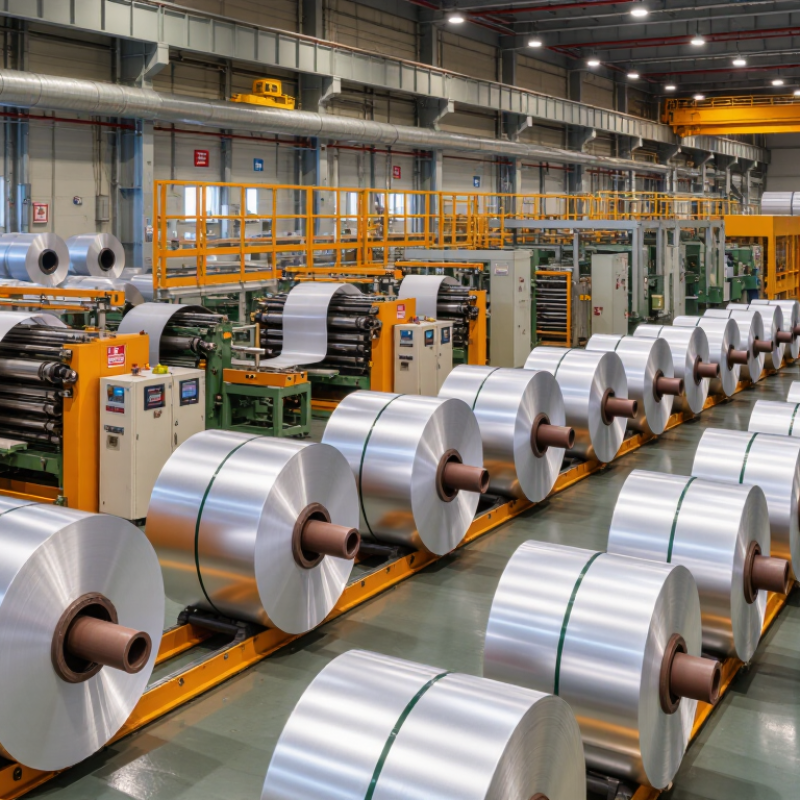
Aluminium Foil: Types, Uses, and Global Market Overview
Aluminium foil serves packaging, insulation, cooking, and industrial applications worldwide. Its performance depends on alloy, thickness, temper, and surface treatment. Household foil is usually thin, flexible, and easy to tear. Container foil is heavier and shaped for trays or meal boxes. Pharmaceutical foil often uses strict barrier specifications. It protects sensitive products from moisture, light, oxygen, and odors.
Global buyers should match foil type with the final application. A food pack may need heat resistance and clean sealing. An insulation project may require reflective foil with stable mechanical strength.
Industrial converters usually check width tolerance, pinholes, tensile strength, and roll consistency. Small defects matter. A tiny pinhole can weaken an otherwise acceptable barrier.
The global market is influenced by food delivery, medical packaging, construction, and energy efficiency. Demand is growing in developing regions, but transport costs and energy prices can change quotations quickly. Reliable manufacturers should provide technical data, sample rolls, inspection records, and traceable production details.
Buyers also need to verify packing methods, moisture protection, and delivery terms. Factory capability can look impressive on paper. Actual consistency still needs testing. Some specifications may be unclear, especially when suppliers use different measurement standards. Independent inspection is often worthwhile before large orders.
Key Criteria for Evaluating Aluminium Foil Manufacturers
Choosing an aluminium foil manufacturer requires more than comparing quoted prices. Global buyers should examine alloy, temper, thickness, width, and surface requirements. A reliable supplier provides clear technical data for every specification.
Request samples before approving a large order. Measure thickness at several points, inspect the edges, and check for pinholes under strong light. Confirm tensile strength, elongation, and coating performance through documented test reports. Small variations can affect sealing, forming, and production speed.
Traceability matters. Each coil should carry a batch number linked to raw materials, inspection records, and packing details. Ask about quality systems, laboratory equipment, and corrective action procedures. Factory audits can reveal storage problems, weak packaging, or unclear inspection routines. Export experience also matters, especially when shipments face long sea routes and changing humidity.
Capacity claims need careful review. A supplier may show impressive machinery but lack stable control during peak seasons. Ask for recent lead-time records and realistic minimum order quantities. Packaging should include moisture protection, strong cores, and clear handling marks. Communication is another practical test; vague answers often create expensive delays. No manufacturer is perfect. Even strong suppliers may miss an isolated defect, so contracts should define inspection, replacement, and claim procedures. One overlooked detail can damage an entire production run.
Leading Aluminium Foil Manufacturers by Region and Product Range
Regional capability matters when global buyers compare aluminium foil manufacturers. East Asian producers often offer broad ranges, from household foil to pharmaceutical and battery-grade stock. European suppliers commonly emphasize tight gauges, converter-ready surfaces, and documented sustainability controls. North American mills tend to focus on foodservice, insulation, and industrial applications. South Asian and Middle Eastern facilities are expanding export capacity, especially for packaging and container foil.
Product range should be tested, not assumed. Ask for alloy designation, temper, thickness tolerance, width limits, pinhole data, and coating compatibility. A 2024 USGS Mineral Commodity Summaries report estimated global primary aluminium production at about 70 million metric tons in 2023. That large upstream base supports diverse foil supply, but it does not guarantee consistent rolling quality. Scrap availability and energy sources still vary sharply by region.
Independent data adds useful context. The International Aluminium Institute reports that aluminium recycling can save up to 95% of the energy used for primary production. European Aluminium publications also track foil demand, recycling, and regional output, although reporting categories differ between studies. That is an important limitation. Buyers should compare like-for-like data. In practical audits, inspect clean edge slitting, roll protection, and batch traceability. Small defects matter. A beautiful specification sheet can still hide weak process control. Supplier declarations need verification through samples, certificates, and repeat production trials.
Top Aluminium Foil Manufacturers for Global Buyers - Leading Aluminium Foil Manufacturers by Region and Product Range
Typical aluminium foil thickness ranges used across major global product categories. These industry-standard ranges help buyers compare manufacturing capabilities without displaying company or brand data.
Thickness ranges are typical market specifications and may vary according to alloy, temper, width, surface treatment, and customer requirements.
Quality Standards, Certifications, and Production Capabilities
Global buyers should judge aluminium foil suppliers by verifiable systems, not polished samples. The International Aluminium Institute reported global primary aluminium production of approximately 72.8 million tonnes in 2024. That scale makes process control essential. Ask for ISO 9001 certification, audit scope, and lot-level traceability. A reliable plant should record alloy grade, foil gauge, tensile strength, pinhole counts, surface cleanliness, and roll length. It should explain gauge tolerance clearly.
For food and pharmaceutical packaging, compliance must match destination rules. Request contact-safety declarations, coating specifications, and accredited laboratory reports. ISO 22000-based controls can strengthen hygiene management. ISO 14001 supports environmental monitoring. The IAI states that aluminium recycling can save about 95% of primary production energy. Therefore, ask for recycled-content evidence and furnace records. Numbers matter here.
Production capability is more than installed machine capacity. Check casting equipment, rolling passes, annealing control, slitting accuracy, and controlled-area practices. Some factories show impressive certificates but weak corrective-action records. That deserves a second look. In practice, a small trial order reveals more than a long presentation. Edge cracking, telescoped rolls, or uneven core winding may appear quickly. Buyers should review nonconformance data, retention samples, and contingency plans before approving regular shipments.
How Global Buyers Can Select the Right Aluminium Foil Supplier
Selecting the right aluminium foil supplier requires more than comparing quoted prices. Global buyers should verify alloy, temper, thickness tolerance, roll width, and core dimensions. A technical data sheet should match the actual shipment. Ask for recent certificates of analysis, inspection records, and traceability from cast coil to finished roll. Small gaps become costly during high-speed packing.
The International Aluminium Institute reports that recycled aluminium requires roughly 5% of the energy used for primary aluminium production. This makes recycled content relevant, but buyers must check contamination controls and declared percentages. The USGS Mineral Commodity Summaries 2025 estimates global primary aluminium production at about 72 million tonnes in 2024. Large output does not automatically mean reliable foil conversion. Ask about monthly capacity, backup equipment, lead times, and rejection rates. Numbers matter.
For food, pharmaceutical, or industrial applications, request pinhole limits, surface inspection methods, and migration or cleanliness documentation where applicable. Evaluate packaging too. Moisture-resistant wrapping, edge protection, and stable pallets reduce damage during ocean transport. Supplier audits should examine calibration, corrective actions, worker training, and complaint response. I would not pretend that one checklist fits every market. A supplier may pass a factory audit yet struggle with seasonal demand or changing specifications. Require trial rolls before signing a long-term contract, then compare actual gauge variation, sealing performance, and delivery condition against the agreed criteria.
FAQS
Confirm alloy, temper, thickness, width, and surface requirements. Ask for clear tolerance data. Small differences can affect sealing and forming.
Samples expose practical problems early. Measure thickness at several points and inspect the edges. Check pinholes under strong light.
Request documented results for tensile strength, elongation, pinholes, surface cleanliness, and roll length. Coating performance may also require testing.
Each coil should have a batch number. It should connect raw materials, inspection records, and packing details. Missing links deserve attention.
Inspect storage areas, laboratory equipment, packaging, and inspection routines. Review corrective-action records. A clean showroom proves little.
Ask for recent lead-time records, minimum order quantities, and peak-season performance. Check casting, rolling, annealing, and slitting controls. Installed machines are not enough.
Packaging should include moisture protection, strong cores, and clear handling marks. Long sea routes can expose coils to changing humidity. Details matter.
Request contact-safety declarations, coating specifications, and accredited laboratory reports. Verify that documents match the destination market. Certificates alone are not foolproof.
Ask for recycled-content evidence and furnace records. Recycling can reduce energy use significantly. Still, supplier claims need supporting numbers.
Define inspection timing, replacement duties, and claim procedures. Include rules for isolated defects. No supplier is perfect. One unnoticed issue can disrupt an entire production run.
Conclusion
This guide provides a practical overview of the Aluminium Foil Industry, covering major foil types, common applications, and key trends shaping the global market. It explains how aluminium foil serves sectors such as food packaging, pharmaceuticals, household products, electronics, insulation, and industrial manufacturing. Readers will also learn how to evaluate manufacturers based on material quality, thickness range, surface finish, production capacity, customization options, delivery reliability, and technical support.
The article further outlines regional supplier differences and the importance of recognized quality standards, certifications, testing procedures, and responsible production practices. For global buyers, selecting the right supplier requires balancing product specifications, compliance requirements, order volume, pricing, lead times, communication, and long-term supply stability. By comparing these factors systematically and requesting clear documentation and samples, buyers can reduce procurement risks and build dependable international sourcing relationships.