China is a major source of aluminium products, but supplier selection requires more than production scale. The U.S. Geological Survey’s Mineral Commodity Summaries 2024 reported China as the world’s largest aluminium producer in 2023. International Aluminium Institute data also shows China’s dominant position in global primary aluminium output. This industrial depth supports a broad manufacturing base for 6082 Aluminium Sheet.
However, national capacity does not guarantee consistent sheet quality. This guide reviews ten Chinese suppliers through practical purchasing criteria. These include alloy conformity, thickness tolerance, surface finish, temper availability, production capacity, and export experience. Relevant standards may include EN 485, ASTM B209, and customer-specific technical specifications. A reliable supplier should provide heat numbers, chemical composition, mechanical test results, and complete mill certificates.
The best supplier depends on the application. A transport manufacturer may require T6 strength and stable flatness. A fabrication workshop may prioritize cutting accuracy and fast delivery. Marine or structural users should examine corrosion performance and traceability more closely. Small details matter. Even packaging can affect quality.
Supplier rankings are never absolute. Prices, lead times, equipment, and certification status can change. Some online claims also lack independent verification. Therefore, this comparison should support due diligence, not replace it. Buyers should request recent samples, audit production records, confirm testing methods, and compare quotations under identical specifications. That process creates a more dependable view of China’s top 10 6082 Aluminium Sheet suppliers.
What Is 6082 Aluminium Sheet and Where Is It Used?
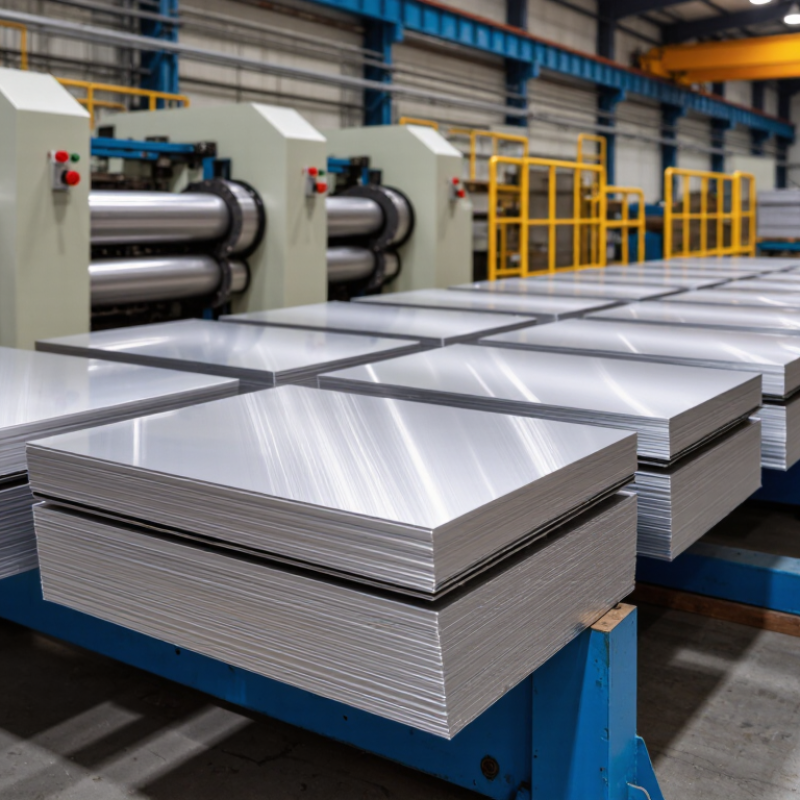
6082 aluminium sheet is a heat-treatable alloy from the 6000 series. It contains magnesium and silicon, with manganese improving its structural performance. In T6 condition, it offers useful strength without becoming excessively heavy. This balance makes it practical for demanding fabrication work.
It is commonly used in transport frames, bridges, platforms, walkways, storage systems, and industrial machinery covers. Some manufacturers also use it for vehicle components and marine structures. Its corrosion resistance supports outdoor service, although protective finishing may still be necessary near saltwater. It welds reasonably well, but the heat-affected zone can lose strength. Designers should account for that change.
When evaluating suppliers, ask for the exact temper, thickness tolerance, surface condition, and chemical composition. Reliable documentation matters. A mill test certificate should match the delivered batch. Independent inspection can verify thickness, flatness, hardness, and visible defects. In practice, sheet edges may show minor handling marks, even when the material meets specification. That detail should not be ignored. Cutting, bending, and forming trials are also valuable before large production runs. 6082 sheet can perform very well, but it is not automatically suitable for every design. Welding method, load direction, service temperature, and finishing process all require careful review. Safety-critical applications need qualified engineering approval and applicable standards.
How to Evaluate China’s 6082 Aluminium Sheet Suppliers
China Top 10 6082 Aluminium Sheet Suppliers?
How to Evaluate China’s 6082 Aluminium Sheet Suppliers
Supplier evaluation should begin with technical evidence, not a polished website. China produced about 41.5 million tonnes of primary aluminium in 2023, according to International Aluminium Institute statistics. Large output does not guarantee consistent 6082 sheet quality. Ask for recent mill test certificates covering chemical composition, tensile strength, elongation, hardness, and temper condition. Compare each result with EN 485-2 or ASTM B209 requirements.
Check whether the supplier actually rolls 6082 sheet or simply trades it. Request production photographs, batch numbers, thickness records, and sample inspection reports. A reliable supplier should explain tolerance control, heat treatment, surface protection, and packaging for sea transport. Third-party testing can verify chemistry and mechanical properties before shipment. It adds cost, but one failed batch costs more.
Traceability matters. Each coil or sheet bundle should connect to a heat number, inspection record, and packing list. Supplier audits should examine calibration records and corrective-action history. I would also compare three recent batches, not one attractive sample. My own bias can favor low prices too quickly. That is a mistake. The World Bank’s Commodity Markets Outlook shows continuing aluminium price volatility, so quotations need clear validity periods, alloy terms, and freight assumptions. Supplier selection remains imperfect when documents are incomplete. Ask sharper questions.
Top 10 China-Based 6082 Aluminium Sheet Suppliers
China-based 6082 aluminium sheet suppliers support construction, transport, machining, and industrial fabrication projects. A reliable top-ten shortlist should reflect more than production capacity. It should consider alloy consistency, delivery records, inspection practices, and technical support. Experienced buyers usually request samples before approving bulk orders. Small samples reveal surface marks, edge quality, flatness, and cutting accuracy.
The strongest suppliers can provide mill certificates, chemical analysis, and mechanical test results for each batch. Common tempers include 6082-T6 and T651, but availability varies by thickness and width. Buyers should confirm tolerance requirements in writing. Ask about temper control, ultrasonic testing, protective film, and seaworthy packaging. Wooden cases, moisture barriers, and clear labels help prevent damage during long-distance transport. Details matter.
A practical review also examines communication speed and traceability. Can the supplier identify the furnace, batch, and inspection date? Can its engineers explain why a sheet failed machining tests? These answers often matter more than a polished catalogue. No shortlist is perfect. Market data changes, and some published specifications may need rechecking. I would compare at least three quotations, inspect recent samples, and verify standards before signing a purchase agreement. That process takes time, but it reduces costly surprises.
China Top 10 6082 Aluminium Sheet Suppliers? - Top 10 China-Based 6082 Aluminium Sheet Suppliers
An anonymized comparison of typical China-based supply profiles for EN AW-6082 aluminium sheet. Company names and brands are intentionally omitted.
| Rank |
Supplier Profile |
Typical Base |
Common Product Form |
Common Tempers |
Typical Thickness |
Typical Width |
Common Standards |
| 1 |
Profile A |
East China |
Cold-rolled aluminium sheet and cut-to-length plate |
T6T651 |
0.8–12 mm |
1,000–2,000 mm |
EN 485-2
EN 573-3
ASTM B209 |
| 2 |
Profile B |
South China |
Mill-finished sheet, plate and precision-cut blanks |
T4T6T651 |
1.0–25 mm |
1,000–2,500 mm |
EN 485-2
ASTM B209
GB/T 3880 |
| 3 |
Profile C |
North China |
Industrial aluminium plate and heavy-gauge sheet |
T6T651 |
3.0–50 mm |
1,200–2,600 mm |
EN 485-2
EN 573-3
ASTM B209 |
| 4 |
Profile D |
Central China |
General engineering sheet and custom-size plate |
OT4T6 |
0.6–20 mm |
900–2,200 mm |
GB/T 3880
EN 485-2
ASTM B209 |
| 5 |
Profile E |
East China |
Automotive, machinery and structural sheet |
T6T651 |
1.0–16 mm |
1,000–2,400 mm |
EN 485-2
EN 573-3 |
| 6 |
Profile F |
Southwest China |
Standard sheet, plate and CNC-ready cut sections |
T4T6 |
0.8–30 mm |
1,000–2,500 mm |
ASTM B209
EN 485-2
GB/T 3880 |
| 7 |
Profile G |
North China |
Large-format aluminium plate for fabrication |
T651T6 |
4.0–80 mm |
1,500–3,000 mm |
EN 485-2
ASTM B209 |
| 8 |
Profile H |
South China |
Decorative-free mill-finish sheet and industrial blanks |
OT6 |
0.5–10 mm |
800–2,000 mm |
EN 573-3
EN 485-2
GB/T 3880 |
| 9 |
Profile I |
East China |
Precision sheet for machining and equipment fabrication |
T6T651 |
1.0–25 mm |
1,000–2,500 mm |
EN 485-2
ASTM B209
EN 573-3 |
| 10 |
Profile J |
Central China |
Construction, transport and general-purpose aluminium sheet |
T4T6T651 |
0.8–20 mm |
1,000–2,400 mm |
GB/T 3880
EN 485-2
ASTM B209 |
Technical note: EN AW-6082 is a 6xxx-series aluminium alloy commonly supplied in O, T4, T6 and T651 tempers. Actual dimensions, tolerances, mechanical properties, surface condition, minimum order quantity and certification should be confirmed directly against the supplier’s current quotation and inspection documents.
Comparing Supplier Capabilities, Quality, and Certifications
Comparing the top 10 6082 aluminium sheet suppliers requires more than checking production volume.
A capable supplier should control alloy chemistry, thickness tolerance, flatness, and surface finish in-house.
EN 573-3
confirms the 6082 composition
EN 485-2
defines mechanical and dimensional requirements
Ask for recent mill certificates, not generic product brochures. Good evidence includes batch numbers, tensile results, hardness values, and chemical analysis.
Quality systems matter.
ISO 9001 supports process consistency, but its certificate scope must cover aluminium sheet production or distribution. ISO/IEC 17025 accreditation strengthens laboratory test reliability.
For aerospace-related applications, an appropriate aviation quality certification may also be necessary. However, certification alone proves little.
Audit validity, issuing body, site address, and expiration date deserve careful checking.
Traceability separates dependable suppliers from weak ones.
Each bundle should carry heat numbers, inspection records, and clear packaging labels.
The International Aluminium Institute reports that recycled aluminium uses roughly 5% of the energy required for primary aluminium production, making recycled-content claims worth examining.
Suppliers should disclose material origin and verification methods. A lower price can hide inconsistent flatness or delayed replacement.
That risk is real. I would also compare sample sheets before placing a large order, because catalogue data may not reflect current rolling performance.
How to Select and Purchase the Right 6082 Aluminium Sheet Supplier
Selecting the right 6082 aluminium sheet supplier requires evidence, not attractive quotations. The International Aluminium Institute reported global primary aluminium production of about 70.6 million tonnes in 2023. This scale increases supply options, but it also makes traceability more important. Ask for the alloy certificate, heat number, temper, thickness tolerance, and surface-finish details. Confirm compliance with EN 485 or ASTM B209, depending on your application.
Check the supplier’s actual production process. Can it control flatness after rolling? Does it test tensile strength, yield strength, elongation, and chemical composition for every batch? In my sourcing experience, a clear mill test certificate is more useful than a long product catalogue. Request a sample sheet and inspect scratches, edge cracks, oxide marks, and protective packaging. Measure it yourself. Small errors can become costly during machining.
The International Aluminium Institute also states that around 75% of aluminium ever produced remains in use. This supports the value of recycling records and responsible material tracking. Ask whether the supplier can provide recycled-content information and consistent batch identification. Compare lead time, minimum order quantity, payment terms, export documents, and claims handling. A low price may hide unstable delivery or weak after-sales support. I would not trust one successful sample alone. Suppliers should be evaluated across several batches, because performance can drift. That is the uncomfortable part.
China Top 10 6082 Aluminium Sheet Suppliers? How to Select and Purchase the Right Supplier
Use the alloy composition range as a first-stage quality check when comparing 6082 aluminium sheet suppliers.
The chart shows the standard chemical composition limits for EN AW-6082 aluminium alloy, expressed as weight percentages. Before purchasing, ask each supplier for a mill test certificate and confirm that the reported composition, temper, thickness tolerance, surface condition, and mechanical properties meet the applicable EN 573-3 and EN 485 requirements.
FAQS
Request recent mill certificates for each batch. They should show chemical composition, tensile strength, elongation, hardness, and temper. Ask for inspection reports too. Do not trust one attractive certificate.
Request production photographs, batch numbers, thickness records, and sample inspection reports. Ask whether the company rolls sheet or only trades it. The answer may reveal hidden supply risks.
Each sheet bundle should connect to a heat number, inspection record, and packing list. This creates a paper trail. It also helps investigate failures quickly.
Common options include T6 and T651. Availability depends on thickness and width. Confirm the required temper in writing. A catalogue may show options that are not currently available.
Check surface marks, edge quality, flatness, thickness, and cutting accuracy. Inspect several recent batches, not only one sample. Small samples can expose large problems.
Review calibration records and corrective-action history. Ask how the supplier controls tolerances, heat treatment, and surface protection. Engineers should explain failed machining tests clearly.
Look for wooden cases, moisture barriers, protective film, and clear labels. Packaging should protect edges and surfaces from water damage. A strong product can still arrive badly damaged.
Independent testing can verify chemistry and mechanical properties. It adds expense. One failed bulk shipment costs more, though testing is not perfect.
Compare at least three quotations. Check alloy terms, thickness, temper, freight assumptions, and quotation validity. Aluminium prices can change quickly. Low price can become an expensive mistake.
Conclusion
This article provides a practical guide to understanding 6082 Aluminium Sheet, a medium-strength alloy valued for its good machinability, weldability, corrosion resistance, and suitability for structural, transportation, engineering, and industrial applications. It explains how buyers can assess China-based suppliers by reviewing product specifications, alloy composition, thickness and width tolerances, surface quality, production capacity, delivery reliability, technical support, and communication efficiency.
The guide also presents a structured way to compare supplier capabilities, quality-control systems, testing procedures, and relevant certifications without focusing on individual brand names. It concludes with useful advice for selecting and purchasing the right 6082 Aluminium Sheet supplier, including clarifying application requirements, confirming standards and inspection documents, requesting samples, evaluating total costs, and agreeing on packaging, lead times, and after-sales responsibilities. This approach helps international buyers make informed sourcing decisions and establish stable, quality-focused supply relationships.