
China Top 10 Aluminium Foil Plant Suppliers for Buyers

Time:2026-11-05 Author:Isabella
0%

Aluminium foil sits behind familiar products: blister packs, takeaway trays, insulation layers, and household rolls. Yet choosing a supplier is not a simple price comparison. Buyers must match foil thickness, alloy, temper, roll width, surface finish, and production volume to the intended application. Small differences matter. A crease or pinhole can disrupt converting lines and increase waste.

Market data helps explain the sector’s importance. Grand View Research estimated the global aluminium foil market at about US$27.1 billion in 2023, with projected growth through 2030. The International Aluminium Institute also reports that roughly 75% of all aluminium ever produced remains in use today, reflecting the metal’s durability and established recycling systems. These figures describe broad market and material trends; they do not certify any individual factory.

This guide to China Top 10 Aluminium Foil Plant Suppliers for Buyers offers a practical starting point for supplier research. It considers product range, manufacturing capability, quality controls, export experience, and communication. Buyers should verify specifications, test samples, and review relevant certifications directly. Ask how the plant controls gauge variation and protects finished rolls from moisture or edge damage. A supplier list is not a factory audit. And no shortlist is perfect. Production claims may look convincing on paper, so confirm them against actual samples, records, and clear answers before placing an order.
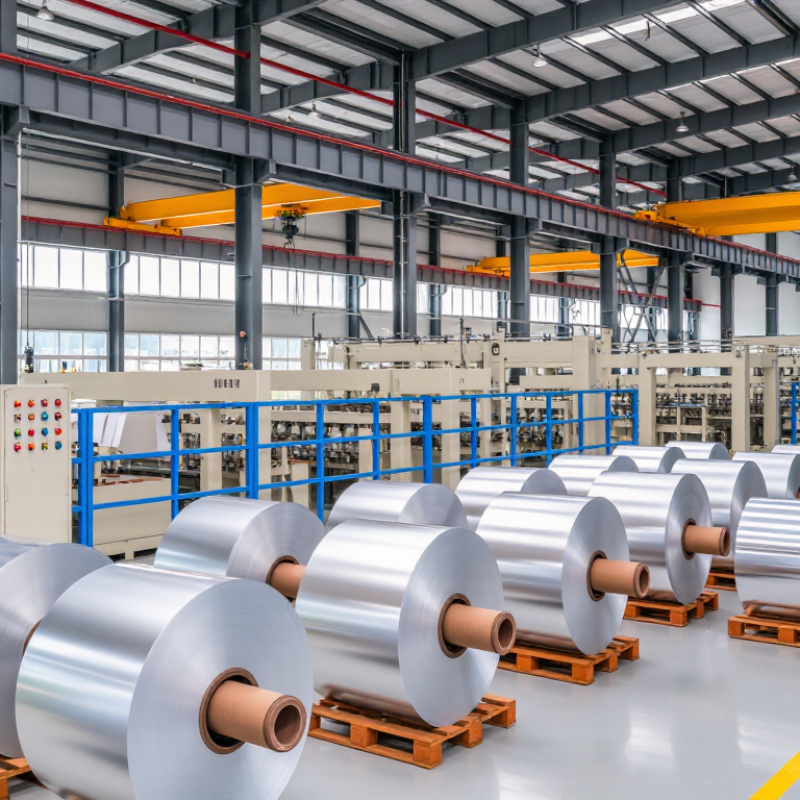
China Top 10 Aluminium Foil Plant Suppliers for Buyers

China’s Aluminium Foil Manufacturing Landscape

China’s aluminium foil manufacturing landscape rests on a large upstream metal base and a broad network of rolling and converting facilities. The International Aluminium Institute’s 2024 production statistics report roughly 41.6 million tonnes of Chinese primary aluminium output in 2023, out of about 70.6 million tonnes worldwide. This scale supports material availability, but primary aluminium output is not the same as finished foil capacity. Foil quality still depends on rolling control, alloy consistency, annealing, and careful surface inspection.

For buyers comparing Chinese suppliers, production scale is only one clue. Ask for specifications covering thickness tolerance, pinholes, tensile strength, roll width, and packaging. Request recent test records and samples from the same production line intended for the order. At a mill, thin foil can show tiny edge waves or surface marks under strong inspection lights; small defects may matter in high-speed packaging. Still, a single sample cannot prove consistent batch performance. That is easy to overlook.

Tips: Match the supplier’s process to your end use, then confirm tolerances and inspection methods in writing. Check lead times, minimum order quantities, and how the mill handles nonconforming rolls. Ask direct questions.

How to Evaluate Aluminium Foil Plant Suppliers

How to Evaluate Aluminium Foil Plant Suppliers

When evaluating aluminium foil plant suppliers in China, match the equipment to your actual product range. List target foil thickness, coil width, alloy, and expected output before requesting quotations. Ask suppliers to explain how their rolling, slitting, and winding systems handle those requirements. Clear answers matter more than impressive production figures. Small details matter.

Request a live or recorded trial using comparable material, and review sample coils for thickness consistency, edge quality, and winding tension. Ask for documented acceptance criteria, installation scope, operator training, spare-parts availability, and response times. Speak with customers who run similar lines, where possible. A showroom is only one clue. I would still leave room for doubt: a successful test may not reflect months of continuous operation.

Tips: Compare quotations line by line, including utilities, tooling, commissioning, and exclusions. Check whether stated output assumes a specific foil grade and operating schedule. Ask to inspect maintenance records and key components in person. Keep your own notes during factory visits; small differences in controls or service access can affect daily work. If a supplier cannot explain a limitation plainly, pause and ask again.

Profiles of Ten Leading Aluminium Foil Suppliers in China

China’s aluminium foil supply base includes several distinct supplier profiles. These ten profiles describe capabilities buyers may encounter, not an independently audited ranking. Large integrated mills handle high-volume orders, while packaging specialists focus on consistent roll widths and surface finish. Food-service suppliers often offer household rolls and container foil. Pharmaceutical packaging suppliers emphasize tight thickness control and clean handling. HVAC-focused producers make foil for insulation and fin stock. Battery-foil suppliers serve applications that demand precise gauges and uniformity. Details matter.

Other profiles include converters that laminate or coat foil, slitters that prepare narrow rolls, export-oriented manufacturers familiar with overseas documentation, and smaller mills suited to trial orders. A useful comparison starts with the intended use, alloy, temper, thickness tolerance, roll dimensions, and required finish. Ask for current test reports and samples, then compare measurements against the purchase specification. Inspect packaging too: crushed edges can make a good roll difficult to use. Claims alone are not proof. Some supplier descriptions may sound similar, and I would not treat a polished catalogue as evidence of stable production. Confirm lead times, minimum order quantities, traceability, and how defects are handled before committing.

China Top 10 Aluminium Foil Plant Suppliers for Buyers - Profiles of Ten Leading Aluminium Foil Suppliers in China

Profile Supplier Capability Segment Typical Foil Products Common Buyer Applications Useful Supplier Checks
01 Flexible-packaging foil producer Thin aluminium foil, commonly around 6–12 μm; plain or surface-treated grades Food, beverage, confectionery, and household flexible packaging laminates Ask for thickness tolerances, pinhole inspection method, surface cleanliness, and converting trials with the intended laminate structure.
02 Household foil producer Roll foil commonly supplied in gauges around 9–25 μm, with consumer or catering formats Food wrapping, cooking, storage, and food-service use Confirm alloy and temper, roll dimensions, edge quality, winding consistency, and applicable food-contact documentation for the destination market.
03 Food-container foil producer Container stock and foil suitable for forming, with gauge selected for the container design Foil trays, takeaway containers, and food-service packaging Request forming-test results for the buyer’s tooling; verify lubrication, surface condition, temper, and dimensional consistency.
04 Pharmaceutical-packaging foil producer Blister-packaging and lidding foil; specifications depend on the blister construction and printing or coating requirements Pharmaceutical blister packs and other regulated healthcare packaging Check batch traceability, coating and lacquer controls, print compatibility, change-control procedures, and documentation required by the buyer.
05 Cold-form blister foil producer Aluminium-based cold-form laminate structures, rather than aluminium foil alone High-barrier pharmaceutical blister packaging Confirm the complete laminate structure, forming performance, barrier requirements, seal compatibility, and validation support for the buyer’s packaging line.
06 Heat-exchanger foil producer Fin stock and related foil or strip products, often supplied in gauges in the approximate 0.08–0.20 mm range Air-conditioning, refrigeration, and other heat-exchanger components Specify alloy, temper, thickness, width, surface treatment, and any hydrophilic or corrosion-resistance requirements; validate performance with component testing.
07 Cable and electrical-foil producer Foil and foil-laminate products for shielding or wrapping, supplied to the cable design specification Communication, instrumentation, and power-cable constructions Check conductivity requirements, foil width and thickness, edge condition, wrapping performance, and compatibility with the cable’s bonding or drain-wire design.
08 Insulation and building-material foil producer Plain or laminated foil facings in gauges selected for the insulation product Thermal insulation facings, reflective barriers, and building-product laminates Clarify whether the required product is bare foil or a laminate; verify adhesive compatibility, pinhole expectations, roll dimensions, and relevant end-use testing.
09 Industrial and technical foil producer Medium- and heavier-gauge foil or strip made to customer drawings and process requirements Industrial laminates, engineered components, and specialty conversion Review alloy and temper certificates, dimensional capability, surface finish, sampling plans, and the supplier’s ability to maintain repeatable production lots.
10 Foil converting and finishing supplier Slit, rewound, coated, laminated, or printed foil sourced or processed to customer specifications Custom packaging, narrow-width rolls, and products requiring additional finishing Distinguish the converter’s own processes from outsourced steps; confirm incoming-material traceability, finishing tolerances, and quality responsibility.
Buyer note: These are capability-based supplier profiles, not a verified ranking of named companies. Foil gauges and available specifications vary by alloy, temper, product design, and production line. Ask shortlisted suppliers for current technical data sheets, samples, test reports, and destination-market compliance documents. For food-contact applications, check the rules applicable in the target market; standards and regulations do not automatically certify a particular supplier or product.

Comparing Suppliers by Products, Capacity, and Certifications

A useful comparison of aluminium foil suppliers starts with product fit, not headline capacity. Check the quoted thickness range, alloy and temper, maximum roll width, and whether the plant can supply household, container, or flexible-packaging foil. Ask for recent inspection records and sample rolls; pinholes and uneven winding are easier to spot on a real roll than in a brochure. Small details matter.

Capacity needs context. The International Aluminium Institute reported global primary aluminium production of about 72.8 million tonnes in 2024, but that figure does not show how much foil a particular plant can deliver. Ask suppliers for foil-line capacity, typical lead times, and output during peak demand. Compare actual production with nameplate capacity. The gap can be telling.

Certifications should match the intended use. ISO 9001 can support quality-system checks, while environmental and food-contact documentation may also matter for specific orders. Verify certificate scope, issuing body, and expiry date directly. The Institute’s widely cited finding that roughly 75% of all aluminium ever produced remains in use highlights the value of recycling, but it does not certify a supplier’s recycled content. I would not treat a certificate list as proof of consistent quality; that still needs testing.

A Buyer’s Checklist for Choosing the Right Supplier

A buyer’s checklist should start with the foil itself. Define alloy, temper, thickness, width, and tolerance before comparing quotations. Ask how the plant checks thickness across a coil, not just at one point. Request sample rolls and inspect edges, surface marks, winding, and packaging. For sensitive applications, confirm that relevant test reports and certifications match the product and destination market. Check the basics.

Then review production consistency. Ask for recent inspection records, batch traceability, and the process used to handle defects. Confirm minimum order quantities, lead times, available slitting, and how changes in demand affect delivery. A low price may exclude tooling, packing, or freight, so compare the full quotation. Ask for evidence. A neat brochure is not proof of reliable output, and one polished sample cannot show how every batch performs. Even capable plants can have occasional variation; agree on measurable acceptance criteria before placing a large order. When possible, begin with a modest trial and record what arrives, including coil condition and labels. The extra checks take time, but they make supplier comparisons more useful.

FAQS

What information should I prepare before requesting a quotation?

List your target thickness, coil width, alloy, and expected output. Clear specifications make supplier comparisons easier.

How can I check a production line’s quality?

Request a live or recorded trial using comparable material. Inspect sample coils for thickness consistency, clean edges, and even winding.

What should I verify beyond the sample rolls?

Ask about installation, operator training, spare parts, and service response times. A good sample proves little about months of production.

How do I compare supplier quotations fairly?

Compare utilities, tooling, commissioning, and exclusions line by line. Check which material grade and operating schedule support the quoted output.

Which supplier profile might suit my product?

Large mills may suit high-volume orders; converters handle coated or laminated foil. Smaller mills can be useful for trial orders.

What details matter when comparing products?

Check alloy, temper, thickness tolerance, roll dimensions, and surface finish. Measure samples against your purchase specification.

How can I assess a supplier’s real capacity?

Ask for foil-line output, typical lead times, and peak-season delivery records. Nameplate capacity alone can be misleading.

How should I verify certificates and quality claims?

Check each certificate’s scope, issuer, and expiry date. Then test the material yourself; paperwork is not the whole story.

What should I inspect during a factory visit?

Review maintenance records and key components. Note controls and service access, too. I might miss something, so keep written notes.

Conclusion

This article explores China’s aluminium foil manufacturing landscape and the factors buyers should consider when sourcing from an Aluminium Foil Plant. It explains how to assess suppliers based on product range, production capacity, quality-control processes, technical capabilities, and relevant certifications. The profiles of ten leading suppliers offer a structured overview of the market without favoring any single company, helping readers understand the range of options available for different purchasing needs.

A side-by-side comparison of products, capacity, and certifications can help buyers narrow their choices and identify suppliers suited to their specifications and order volumes. The article concludes with a practical checklist covering product requirements, sample evaluation, communication, delivery expectations, and verification of supplier credentials. Together, these points provide a clear framework for making an informed sourcing decision.

Isabella

Isabella

Isabella is a dedicated marketing professional with a sharp focus on driving brand growth and engagement through strategic content creation. With an extensive background in digital marketing, she combines her passion for storytelling with her keen understanding of industry trends to deliver......