
Choosing aluminum foil for global sourcing is not simply a matter of comparing prices per ton. The right material must match its application, production process, shipping conditions, and compliance requirements. A thin household foil may suit wrapping, while a stronger alloy could be necessary for pharmaceutical packaging, insulation, or industrial forming. Small specification errors can create large losses.
The Aluminum Foil should be evaluated through measurable details. Check alloy, temper, thickness tolerance, width, roll diameter, surface finish, pinhole limits, and core dimensions. Ask suppliers for recent certificates of analysis, inspection reports, and samples from actual production batches. A reliable sourcing team should also review factory capacity, packaging methods, moisture protection, and traceability. One wet container can damage carefully produced rolls.
Supplier claims need verification.
Request independent testing when the application is sensitive. Confirm that materials meet the destination market’s relevant safety, labeling, packaging, and environmental requirements. These rules can differ between countries and may change over time. Experienced buyers often compare several quotations using total landed cost, not only the factory price. Freight, duties, insurance, testing, rejects, and delays matter.
There is no universal “best” foil. A cheaper option may perform better in one process but fail during deep drawing or high-speed sealing. Even experienced teams can overlook a small detail, such as excessive camber or unsuitable temper. That is worth admitting. Use trial orders, written specifications, and clear acceptance criteria before committing to full-volume purchasing. With disciplined verification, global buyers can reduce surprises and select aluminum foil that performs consistently from the supplier’s warehouse to the final production line.
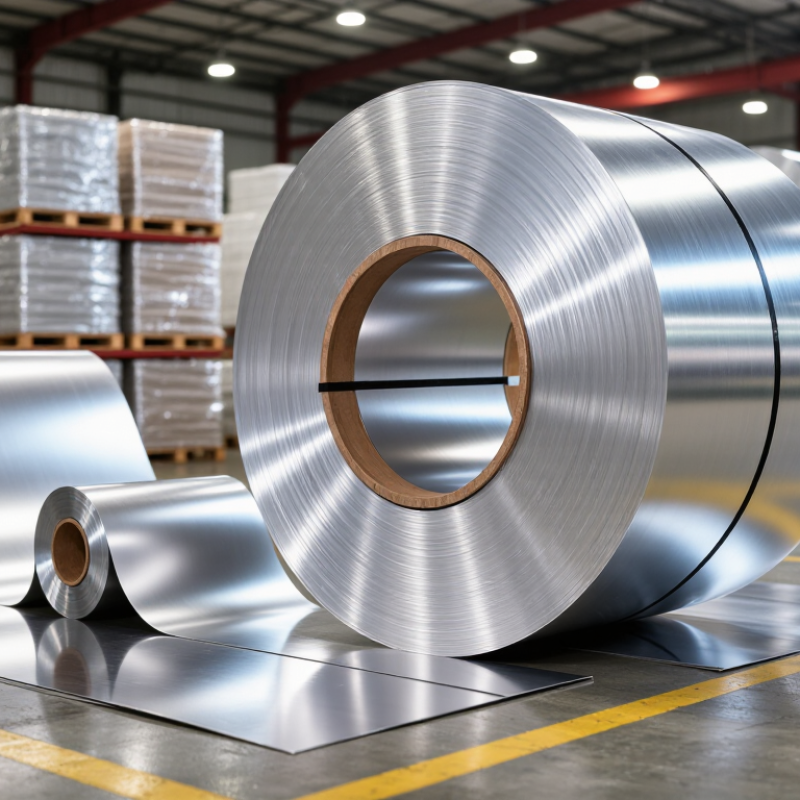
Defining the foil requirement is the real starting point for global sourcing.
“Aluminum foil” is not a complete specification. State the alloy, temper, thickness, width, roll length, core diameter, and intended use. For example: 8011-O, 30 microns, 1,200 millimeters wide, with a 76-millimeter core. Include tolerance limits, not only nominal values. A 30-micron target without tolerance invites different interpretations.
Scale also changes sourcing risk. The U.S. Geological Survey’s Mineral Commodity Summaries 2025 estimated global primary aluminum production at about 72 million metric tons in 2024. China contributed roughly 43 million tons. This concentration makes origin, lead time, and backup capacity important.
Ask suppliers to disclose ingot origin, rolling location, monthly capacity, and inspection records. ASTM B479/B479M can support packaging foil requirements, while EN 485 helps define strip tolerances. The selected standard must match the product.
Define measurable checks for pinholes, oil residue, tensile strength, elongation, stains, and coating adhesion. Specify test methods, sampling frequency, and acceptable defect photos.
Packaging needs equal precision: moisture barriers, edge protection, pallet limits, and roll orientation. The International Aluminium Institute reports that recycled aluminum requires about 5% of the energy used for primary metal. Recycled-content targets may affect cost and documentation.
A neat specification can still be wrong. Small details matter.
Buyers sometimes focus on price, then reject rolls for minor telescoping. Trial orders and corrective-action rules should be written before production begins.
Choosing aluminum foil for global sourcing starts with the application, not the lowest quotation. Alloy grade affects strength, ductility, corrosion resistance, and forming performance. The 1xxx series offers high purity and excellent conductivity, but it can tear during demanding forming. The 3xxx series adds manganese for better strength and remains suitable for many packaging applications. The 8xxx series can provide tailored performance, especially when thinner gauges or stronger barrier structures are required. Alloy selection is rarely one-size-fits-all.
Temper matters too. Soft foil bends easily around irregular products, while harder temper improves handling and dimensional stability. Compare thickness carefully, because a small difference can change pinhole risk, weight, and production speed. Product form also influences cost. Jumbo rolls suit high-volume converting, slit rolls fit narrower equipment, and sheets work better for manual handling or smaller production runs. Ask for core dimensions, winding direction, edge condition, and tolerance data. These details often reveal sourcing problems early.
Tips: Request samples from the exact alloy, temper, and thickness quoted. Test them on your own filling or wrapping line. Check tensile strength, elongation, surface quality, and pinholes. Confirm whether the supplier measures thickness by average or point tolerance. That distinction matters. I have seen a technically correct specification fail because the roll width did not match the converter’s setup. Recheck assumptions with production and quality teams. A cheaper foil may create more scrap, delays, and rework. Your first comparison may be incomplete. Revisit it.
Choosing aluminum foil for global sourcing requires more than comparing price per kilogram. Thickness controls barrier strength, flexibility, and material cost. European Aluminium reports that foil products commonly range from about 6 to 200 micrometres, depending on use. Thin foil may suit lightweight wrapping, but it can wrinkle or tear during high-speed filling. Thicker foil offers better puncture resistance. It may also increase freight costs. I have seen buyers specify thickness without checking tolerance. That mistake creates unstable converting results.
Dimensions need equal attention. Confirm roll width, outer diameter, core inside diameter, winding direction, and slit tolerance before ordering. A 1-millimetre mismatch can stop a production line. Performance specifications should include tensile strength, elongation, pinhole limits, surface cleanliness, and flatness. For laminated structures, request coating adhesion and heat-sealing data too. ASTM B479/B479M and EN 546 provide useful references, but the final specification should match the machine and application. A laboratory certificate is helpful. It is not a production guarantee.
Tips: Ask for samples from three production lots, not one. Measure thickness at multiple points across the web. Compare the results with the supplier’s certificate. The International Aluminium Institute states that recycled aluminum requires roughly 5% of the energy used for primary aluminum production. Therefore, recycled content can support sourcing goals, but verify alloy consistency and impurity controls. I would not accept a sustainability claim without documented mass-balance or recycled-content evidence. Price still matters. It should never replace dimensional and performance testing.
Typical sourcing reference ranges for aluminum foil. Final specifications should be confirmed against the applicable product standard, approved drawing, and supplier quality agreement.
| Application Profile | Common Alloy / Temper | Recommended Thickness | Typical Width and Coil Dimensions | Typical Mechanical Requirements | Key Performance Specifications | Recommended Quality Checks | Global Sourcing Considerations |
|---|---|---|---|---|---|---|---|
| Household wrapping foil | 1235-O, 8011-O, or equivalent commercially pure and non-heat-treatable foil | 0.012–0.025 mm |
Width: 200–1,600 mm Coil outside diameter: commonly 300–800 mm Core inside diameter: commonly 76 or 152 mm |
Tensile strength: typically 45–100 MPa Elongation: commonly 10% or higher, depending on alloy and gauge |
Good flexibility, foldability, and dead-fold behavior; controlled surface finish; low oil residue | Thickness profile, width tolerance, pinholes, edge cracks, surface cleanliness, roll hardness, and winding quality | Confirm whether the quoted thickness is nominal or minimum; define core dimensions, net weight, splice policy, and packaging for humid or long-distance transport |
| Flexible packaging and laminate foil | 1235-O, 8079-O, or 8011-O | 0.006–0.012 mm |
Width: 300–1,600 mm Slit widths should be specified by finished laminate design Core inside diameter: commonly 76 or 152 mm |
Tensile strength: typically 45–110 MPa Elongation: commonly 8–20% |
High barrier potential after lamination; excellent light, moisture, oxygen, and aroma protection when pinhole levels and laminate integrity are controlled | Pinhole count, thickness uniformity, surface energy or wettability, oil contamination, roll telescoping, splice count, and bond compatibility | Specify the laminate structure, adhesive system, converting direction, maximum pinholes per square metre, and whether food-contact documentation is required |
| Pharmaceutical blister foil | 8011-H18, 8011-H19, or equivalent hard-temper foil | 0.020–0.030 mm |
Width: 200–1,500 mm Slit coils should include burr limits and winding direction Coil weight is normally defined by the packaging line |
Tensile strength: typically 150–220 MPa Elongation: commonly 1–5% |
High barrier performance, good printability, clean surface, reliable heat-seal or cold-forming compatibility, and low pinhole frequency | Pinhole inspection, coating weight, surface cleanliness, roughness, seal strength, print adhesion, thickness, and extractables documentation where applicable | Require traceability by coil, controlled slitting, validated packaging, certificates of analysis, and documented change-control procedures |
| Semi-rigid food containers and trays | 3003-H22, 3003-H24, 8011-H22, or equivalent | 0.040–0.100 mm |
Width: 300–1,600 mm Blanking or coil dimensions should match press and forming equipment Flatness and camber limits should be included in the drawing |
Tensile strength: typically 120–190 MPa Elongation: commonly 2–12%, depending on temper and thickness |
Good formability, stiffness, tear resistance, and compatibility with food-contact coatings or lacquers | Forming-crack inspection, earing, flatness, thickness, surface defects, lubricant residue, coating adhesion, and dimensional stability | Clarify the forming depth, punch radius, blank size, temper, coating requirements, and applicable food-contact regulations in the destination market |
| Embossed or decorative foil | 8011-O/H14, 3003-O/H14, or equivalent | 0.050–0.150 mm before embossing |
Width: 500–1,600 mm Pattern pitch and embossing depth must be defined Coil winding tension should prevent pattern damage |
Tensile strength: typically 90–180 MPa Elongation: commonly 3–15% |
Consistent embossing depth, visual uniformity, adequate rigidity, and resistance to cracking during forming or lamination | Pattern repeat, embossing depth, coating adhesion, surface defects, edge quality, thickness after embossing, and color or gloss consistency where coated | Approve a master sample, define acceptable pattern variation, and specify inspection lighting and defect limits before mass production |
| Cable shielding and electrical applications | 8011-H18, 1235-H18, or equivalent conductive foil | 0.010–0.050 mm |
Width: 20–1,600 mm Narrow slit widths may require dedicated slitting controls Core size and coil tension must suit high-speed rewinding |
Tensile strength: typically 120–200 MPa Elongation: commonly 2–8% |
Electrical conductivity commonly around 55–61% IACS, depending on alloy and temper; consistent shielding coverage and low burr risk | Electrical resistance or conductivity, thickness, burr height, slit-edge quality, tensile strength, winding quality, and foil continuity | State whether the foil is used with a drain wire, polymer film, or adhesive; define maximum burr height and electrical test method |
| Heat-exchanger and fin-stock material | 3003-H14/H16, 3102-H14/H16, or equivalent heat-exchanger alloy | 0.080–0.300 mm |
Width: 300–1,600 mm Coil outside diameter and weight depend on fin press capacity Flatness, camber, and edge-wave limits should be specified |
Tensile strength: typically 130–210 MPa Elongation: commonly 2–12% |
Good fin-forming performance, controlled strength, thermal conductivity, corrosion resistance, and stable dimensions during processing | Thickness profile, mechanical properties, flatness, edge condition, oil-film weight, corrosion performance, and fin-forming trials | Match alloy and temper to the fin geometry; request process capability data for thickness, flatness, and edge quality when purchasing large volumes |
| Industrial insulation and duct jacketing | 8011-O/H14, 3003-O/H14, or equivalent | 0.040–0.200 mm |
Width: 500–1,600 mm Sheet or coil supply may be used Surface pattern, coating, and cut-length tolerances should be documented |
Tensile strength: typically 90–180 MPa Elongation: commonly 3–18% |
Reflective surface, corrosion resistance, vapor-barrier capability when joints are properly sealed, and adequate handling strength | Thickness, coating or lacquer weight, surface oxidation, pinholes, reflectivity, edge quality, flatness, and moisture-resistant packaging | Define indoor or outdoor exposure, coating system, fire-performance requirements, roll orientation, and protection against condensation during shipment |
| General industrial foil and fabricated parts | 1050-O/H14, 1060-O/H14, 3003-O/H14, or 8011-O/H14 | 0.050–0.500 mm |
Width: 300–1,600 mm Length, sheet size, or slit width should be selected according to the downstream process Tolerance should follow the agreed material standard |
Tensile strength: typically 70–200 MPa Elongation: commonly 3–25% |
The balance of conductivity, corrosion resistance, stiffness, ductility, and forming performance depends on alloy and temper | Chemical composition, thickness, mechanical properties, flatness, surface quality, dimensional tolerances, and batch traceability | Use an approved technical data sheet and inspection plan; do not substitute alloy or temper solely on the basis of price or nominal thickness |
Choosing aluminum foil for global sourcing starts with the supplier, not the catalog photograph. Ask for a current quality manual, factory address, and named technical contact. Request recent batch records covering alloy grade, temper, thickness, width, and roll weight. Small details matter. A reliable supplier should explain how operators control pinholes, wrinkles, edge cracks, and oil residue. During an audit, inspect raw material storage and production flow. Look for labeled coils, clean floors, calibrated gauges, and separated nonconforming stock. Perfect samples can hide weak daily controls.
Certifications must match your market and product use. Check certificate numbers, scope, issuing body, expiration date, and covered production site. Do not accept a logo alone. For food-contact foil, verify applicable migration and hygiene requirements through current test reports. For industrial use, review chemical composition, mechanical properties, and dimensional tolerances. Ask whether reports represent your selected alloy and thickness. They often do not. Independent laboratory testing can confirm tensile strength, surface cleanliness, and pinhole levels before shipment. Keep samples sealed and linked to the purchase order.
Production capability affects consistency more than impressive monthly capacity. Ask about rolling mills, annealing furnaces, slitting lines, inspection equipment, and backup power. Confirm minimum order quantities, lead times, maximum roll diameter, and packaging methods. A capable supplier can provide process flow charts and corrective-action records. Request a pilot order with agreed acceptance limits. Measure thickness at several points, inspect telescoping, and check carton protection after transport simulation. No supplier is perfect. The practical test is how quickly and transparently problems are handled. Put every requirement in writing.
A competitive foil price is only the starting point. Calculate aluminum ingot value, conversion charges, core weight, packing, inland transport, ocean freight, insurance, duties, testing, and financing. The International Aluminium Institute reported global primary aluminum production above 70 million tonnes in 2023. That scale does not remove price risk. It can increase exposure to regional energy and freight disruptions. Use a landed-cost model with low, expected, and high freight scenarios. A spreadsheet can still lie.
Logistics deserves physical detail. A 20-foot container may carry heavy foil rolls, but axle limits can restrict road delivery. Moisture inside a container can stain exposed edges. The UNCTAD Review of Maritime Transport reports that ships carry over 80% of global merchandise trade by volume. Therefore, confirm sailing frequency, port congestion history, roll protection, and claims procedures. I would request shipment photos before loading. It feels excessive. It often prevents arguments later.
Tips: Specify alloy, temper, thickness tolerance, width, core diameter, pinhole limits, and surface finish. Ask for batch-based certificates, not generic templates. For food or pharmaceutical applications, verify applicable declarations and migration testing. Check customs classification with a licensed broker. For European deliveries, review Carbon Border Adjustment Mechanism reporting requirements, which entered its transitional phase in October 2023. The World Bank’s Logistics Performance Index 2023 shows wide differences in customs and delivery reliability between economies. Build a second-source plan, but do not approve it without matching technical samples. Supplier audits matter. They are not perfect. Neither is a low quotation.
State the alloy, temper, thickness, width, roll length, core diameter, and intended use. Include tolerance limits. A 30-micron target is incomplete without them.
Thickness affects barrier strength, flexibility, tearing, and material cost. Measure several points across the web. One reading is not enough.
Confirm width, outer diameter, core inside diameter, winding direction, and slitting tolerance. A one-millimeter mismatch can stop a production line.
Define tensile strength, elongation, pinholes, surface cleanliness, stains, flatness, and oil residue. Laminated products also need adhesion and heat-sealing data.
Request recent batch records for alloy, temper, thickness, width, and roll weight. During an audit, inspect labeled coils, clean floors, calibrated gauges, and separated defective stock. Photos are not enough.
Ask about rolling mills, annealing equipment, slitting lines, inspection tools, and backup power. Also confirm minimum order quantity, lead time, maximum roll diameter, and packaging methods.
Request samples from three production lots, not one. Compare your measurements with the supplier’s certificate. Keep sealed samples linked to the purchase order.
Specify moisture barriers, edge protection, pallet limits, roll orientation, and carton strength. Check the rolls after transport simulation. Small damage can ruin usable material.
Request documented recycled-content or mass-balance evidence. Check alloy consistency and impurity controls. A sustainability claim without records is weak.
A pilot order tests actual consistency, not only polished samples. Write acceptance limits and response deadlines before production begins. Perfect sourcing is unlikely. Transparent problem-solving matters more.
Choosing the right aluminum foil for global sourcing begins with clearly defining its intended application, required grade, alloy, temper, and product form. Buyers should assess whether the foil is designed for packaging, insulation, industrial processing, or another approved use, then compare thickness, width, length, surface finish, strength, flexibility, and barrier performance. These specifications help ensure that The Aluminum Foil will perform reliably under production and transportation conditions.
A dependable sourcing decision also requires careful supplier evaluation. Review quality management systems, relevant certifications, testing procedures, production capacity, customization options, and consistency between batches. Total cost should include material pricing, tooling, packaging, freight, duties, lead times, and inventory requirements rather than focusing only on the quoted unit price. Buyers should also examine documentation, labeling, environmental expectations, import requirements, and supply continuity to reduce compliance, logistics, quality, and delivery risks. A structured comparison of technical performance and commercial factors can support a stable, transparent, and cost-effective global sourcing strategy.
