
Choosing the right Industrial Roll Of Aluminum Foil in 2026 requires more than comparing prices. Material grade, thickness, temper, width, and surface quality directly affect production performance. A suitable roll should unwind smoothly, maintain stable tension, and resist tearing during high-speed processing. Small defects can create large losses.
Common options include 8011, 3003, and 1235 aluminum foil. Each grade serves different applications, from food packaging and insulation to pharmaceutical and industrial converting. Temper selection also matters. Soft foil bends easily, while harder tempers offer better strength and dimensional stability. Buyers should confirm alloy certificates, thickness tolerance, core dimensions, and packaging conditions before ordering.
In practical sourcing, I have found that specifications often look complete but hide important gaps. Some suppliers state “premium quality” without explaining pinholes, roll hardness, or edge control. That wording is not enough. Ask for inspection records, sample rolls, and traceable production information. Check whether the supplier follows relevant quality systems and applicable market requirements. Reliable manufacturers should explain their testing methods clearly.
The best choice depends on the actual line, not a general ranking. A narrow roll may reduce waste, yet it can increase changeover frequency. A thicker foil may improve durability, but it raises material costs. These trade-offs deserve careful review. Even experienced buyers can overlook storage humidity or unsuitable pallet protection. This guide examines the leading Industrial Roll Of Aluminum Foil types for 2026, helping readers compare performance, reliability, and total operating value with greater confidence.
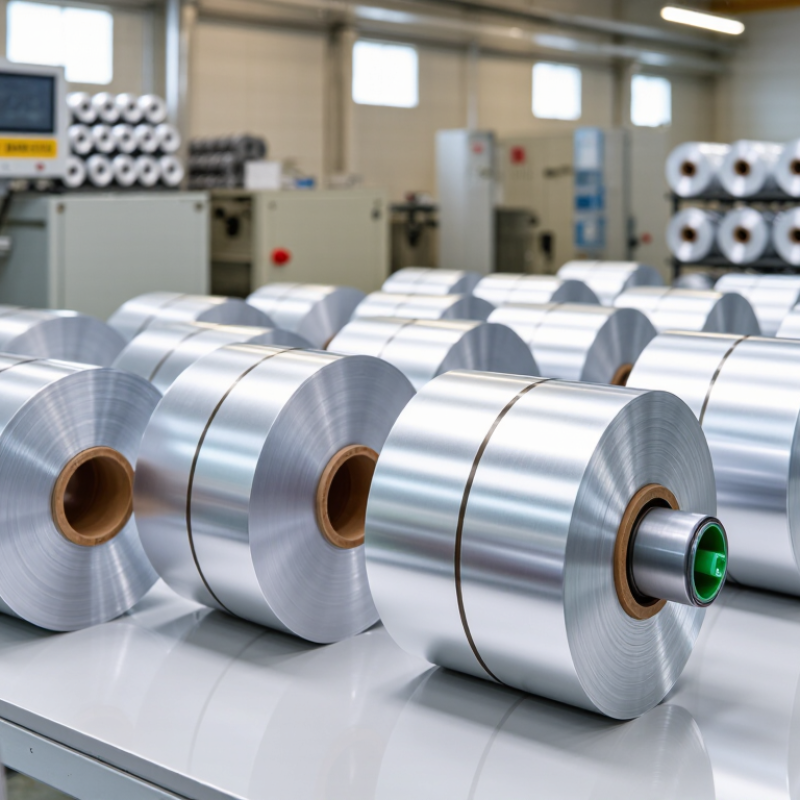
Industrial roll aluminum foil is a continuous metal sheet wound around a durable core. It is supplied in large coils for converting, insulation, heat exchange, electrical, and packaging processes. Unlike household foil, it is selected for controlled thickness, alloy performance, surface condition, and production consistency. That distinction matters.
Manufacturers classify industrial foil by alloy, temper, thickness, width, surface finish, and core size. Alloy selection affects strength, formability, corrosion resistance, and thermal behavior. Temper describes how much the foil has been hardened through rolling and heat treatment. Thickness may range from extremely thin foil to heavier industrial gauges. Surface categories can include mill finish, bright finish, matte finish, or treated surfaces. However, terminology varies between suppliers, so buyers should verify technical definitions.
Application decides the most suitable type. Heat exchangers often require clean surfaces and stable thickness. Insulation systems may prioritize reflectivity and moisture resistance. Forming operations usually need balanced strength and flexibility. Request the alloy designation, temper, thickness tolerance, tensile data, and inspection records. A certificate supports reliable purchasing, but it does not replace process trials. Very thin foil can wrinkle during unwinding, while harder foil may crack around sharp bends. A small trial roll can reveal problems that paperwork misses. This practical step is often overlooked.
| Foil Type / Alloy | Common Temper | Typical Thickness | Typical Roll Width | Key Properties | Common Industrial Applications | Best Selection Advantage |
|---|---|---|---|---|---|---|
| 1235 Aluminum Foil | O, H18 | 0.006–0.200 mm | 100–1,600 mm | High electrical conductivity, good ductility, easy forming, good moisture resistance | Electrical cable shielding, transformer winding, household foil, flexible laminates | A practical choice when conductivity and cost efficiency are important |
| 8011 Aluminum Foil | O, H14, H18 | 0.009–0.200 mm | 100–1,600 mm | Balanced strength, formability, corrosion resistance, and rollability | Industrial packaging, lidding stock, cable wrapping, insulation laminates | The most versatile general-purpose alloy for large-volume industrial conversion |
| 8079 Aluminum Foil | O, H18 | 0.018–0.200 mm | 100–1,600 mm | Excellent flexibility, good pinhole resistance, high elongation in soft temper | Pharmaceutical blister structures, flexible packaging, heat-sealable laminates | Well suited to deep forming and applications requiring reliable barrier performance |
| 8021 Aluminum Foil | O, H18 | 0.018–0.200 mm | 100–1,600 mm | High strength, strong barrier properties, good forming performance, low permeability | Pharmaceutical packaging, technical laminates, high-barrier pouches | A preferred option for demanding barrier and forming requirements |
| 3003 Aluminum Foil | O, H14, H24 | 0.025–0.300 mm | 200–1,600 mm | Higher strength than commercially pure foil, good corrosion resistance, good heat transfer | Heat-exchanger fins, air-conditioning components, cooking and industrial equipment | Best for components needing a useful balance of strength and thermal performance |
| 1100 Aluminum Foil | O, H14, H18 | 0.015–0.250 mm | 100–1,600 mm | High purity, excellent ductility, high thermal and electrical conductivity | Reflectors, insulation facings, general fabrication, heat-transfer and electrical uses | Ideal when purity, formability, and conductivity are prioritized over high strength |
| Electrolytic Capacitor Foil | H18 or specialty hard temper | 0.020–0.150 mm | Typically 100–1,000 mm | Controlled chemistry, uniform thickness, suitable surface structure for etching and forming | Anode and cathode foil for aluminum electrolytic capacitors | Selected according to electrical capacity, etching behavior, and surface quality |
| Embossed or Coated Industrial Foil | Usually O, H14, or H18 | 0.025–0.300 mm before coating or embossing | 200–1,500 mm | Improved surface functionality, controlled reflectivity, bonding, or decorative texture | Insulation facings, sealing materials, reflective barriers, technical laminates | Best when the surface finish or converted performance is as important as the alloy |
It is a continuous aluminum sheet wound around a strong core. Large rolls support insulation, heat exchange, electrical, packaging, and converting processes. It differs from household foil through tighter specifications and production consistency.
Suppliers classify it by alloy, temper, thickness, width, finish, and core size. Alloy affects strength, flexibility, corrosion resistance, and thermal performance. Temper shows how much the foil was hardened during rolling and heat treatment. Terminology can vary. Verify every definition.
Thicker foil generally provides better strength and puncture resistance. Thin foil reduces weight and material use. However, very thin foil may wrinkle during fast unwinding or converting. The best thickness depends on forming, insulation, or barrier requirements.
Correct width improves machine tracking and reduces edge trim. A poorly matched width can create waste and unstable web movement. Core size must fit the converting equipment. Measure usable width, not only the quoted width.
Bright surfaces reflect more radiant energy. Matte surfaces offer a different texture and handling response. Slight roughness may improve coating or printing adhesion. Excessive roughness can increase friction and damage delicate coatings.
Mill-finish foil suits insulation facings, shielding, heat exchangers, and industrial wrapping. Heavy-gauge foil supports ducting, protective liners, and demanding forming work. Coated foil helps with sealing, printing, or chemical resistance. Embossed foil can improve stiffness and contact area. Laminated foil combines aluminum with paper, film, or similar materials.
Request the alloy designation, temper, thickness tolerance, tensile data, and inspection records. Also check pinholes, edge condition, winding tension, and surface cleanliness. A certificate supports purchasing decisions. It does not replace production testing.
Yes, a small trial roll can reveal problems that documents miss. Test unwinding, slitting, forming, adhesion, and web stability. Hard foil may crack around sharp bends. Minor edge damage can cause repeated web breaks. Real production is not perfectly predictable.
Keep rolls dry, wrapped, and protected from sudden temperature changes. Avoid moisture around the core and edges. Inspect rolls before use for dents, corrosion, wrinkles, or loose winding. Storage seems simple. It is often neglected.
Industrial Roll Of Aluminum Foil is a versatile material used across packaging, insulation, electrical, automotive, construction, and other industrial sectors. Its performance depends on how it is classified by alloy, temper, thickness, width, and surface condition. Different aluminum alloys and tempers provide varying levels of strength, flexibility, formability, corrosion resistance, and heat tolerance, allowing manufacturers to match the foil to specific processing and service requirements.
Thickness and roll width influence durability, weight, efficiency, and compatibility with production equipment, while surface finishes such as bright, matte, or treated surfaces can affect reflectivity, bonding, printing, and appearance. Common industrial foil roll types include forming foil, insulation foil, electrical foil, heat-exchange foil, and foil designed for lamination or conversion. Buyers should evaluate technical specifications, dimensional consistency, cleanliness, packaging, and application needs before purchasing. Proper storage in a dry, clean environment and careful handling can help prevent moisture damage, surface scratches, deformation, and performance loss.
