
2026 Best Roll Aluminum Foil Suppliers for Global Buyers

Time:2026-09-16 Author:Liam
0%

Global buyers entering the 2026 market need more than a long supplier list. They need evidence.

Grand View Research estimates that the global aluminum foil market reached approximately USD 27.5 billion in 2023. Its report projects continued growth through 2030, driven by food packaging, pharmaceuticals, and household applications. The International Aluminium Institute reports that recycled aluminium requires roughly 5% of the energy used for primary aluminium production. That figure matters when buyers assess carbon claims.

“Aluminium’s real strength is its ability to circulate repeatedly without losing its essential properties,” says Gerd Götz, Director General of European Aluminium. His observation applies directly to Roll Aluminum Foil sourcing, where alloy control, recovery systems, and production consistency shape long-term value.

Details matter.

A reliable supplier should disclose alloy grades, temper conditions, thickness tolerance, roll width, core dimensions, and surface quality. Buyers should also verify food-contact compliance, pharmaceutical packaging standards, inspection procedures, and shipment records. A bright roll may look perfect under warehouse lighting, yet pinholes can appear during high-speed converting.

That is the uncomfortable part. Market reports use different definitions, so their forecasts cannot be compared blindly. Some suppliers publish impressive capacity figures without showing rejection rates or audit evidence. This guide therefore examines more than price and headline output. It compares manufacturing experience, export reliability, technical documentation, sustainability practices, and after-sales response.

The strongest 2026 suppliers will not simply ship Roll Aluminum Foil. They will help buyers reduce waste, prevent production interruptions, and make decisions that survive closer inspection.
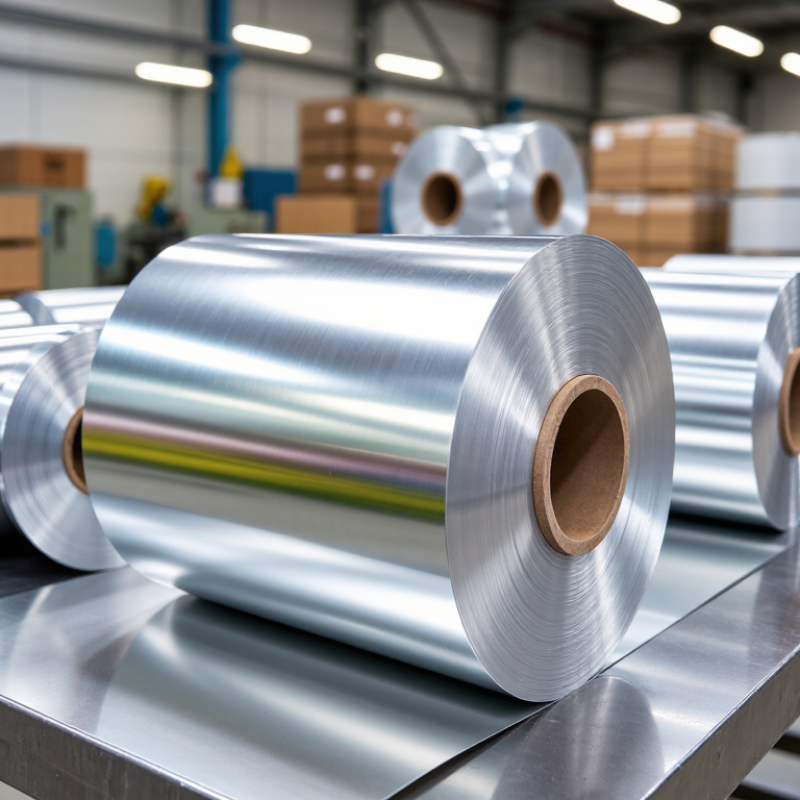
2026 Best Roll Aluminum Foil Suppliers for Global Buyers

Types of Roll Aluminum Foil and Their Main Industrial Uses

Roll aluminum foil comes in several forms, and each serves a different industrial purpose. Household-grade foil is thin, flexible, and commonly used for food wrapping, baking, and short-term storage. Food-packaging foil is often laminated with paper, plastic, or sealant layers. It protects products from light, moisture, oxygen, and outside odors. It bends easily.

Pharmaceutical foil usually uses carefully controlled aluminum alloys and surface finishes. Manufacturers use it for blister packs, sachets, and medical pouches where barrier performance matters. Heavy-gauge industrial foil supports insulation, cable shielding, heat exchangers, and HVAC applications. Embossed foil can improve grip and surface area, while coated foil helps resist corrosion or supports heat-sealing. Alloy, temper, thickness, width, and pinhole limits should match the application rather than a supplier’s standard catalog.

In global purchasing, buyers should request mill certificates, dimensional tolerances, coating data, core specifications, and inspection records. A practical trial roll can reveal problems that samples cannot, such as edge cracking, uneven winding, or telescoping during transport. I have found that packaging performance depends on converting conditions, not foil alone. This point is easy to overlook. Recycled content may support sustainability goals, but it can also affect consistency if controls are weak. Independent testing for tensile strength, elongation, surface cleanliness, and barrier performance adds useful evidence before large-volume orders. Suppliers with stable traceability and realistic lead-time commitments are safer choices for demanding production schedules.

Key Quality Standards for Evaluating Aluminum Foil Suppliers

When evaluating roll aluminum foil suppliers, begin with measurable quality, not attractive catalog images. Request alloy designation, temper, thickness tolerance, width tolerance, tensile strength, and elongation. ASTM B479 provides recognized requirements for aluminum foil used in food packaging. Suppliers should also report pinhole counts, surface defects, oil residue, and edge cracks by production lot.

Ask for a recent certificate of analysis, not a generic template. Measure it. Independent testing should verify thickness and mechanical results against the certificate. ISO 2859-1 sampling can support consistent incoming inspection. In practical audits, a clean first shipment can hide unstable later batches. This is where supplier history matters. Review at least three consecutive lots, including complaint records and corrective actions. A perfect document is not proof.

Sustainability data also deserves technical scrutiny. The International Aluminium Institute reports that recycled aluminum can require about 95% less energy than primary production. European Aluminium’s Environmental Profile Report reaches a similar conclusion for remelting. Therefore, request scrap-source records, recycled-content calculations, and energy data with defined boundaries. “Recycled” can mean different things. Confirm whether it refers to pre-consumer scrap, post-consumer scrap, or a mass-balance claim. Also check food-contact declarations, packaging hygiene controls, and change-notification procedures. These details often separate a dependable global supplier from a merely inexpensive one.

2026 Best Roll Aluminum Foil Suppliers for Global Buyers - Key Quality Standards for Evaluating Aluminum Foil Suppliers

Evaluation Dimension Recommended Benchmark for Global Buyers Typical Verification Method Why It Matters
Common Alloy Availability 8011 for general packaging and household foil; 1235 for high-ductility foil; 3003 where higher strength and formability are required. Review the mill certificate and chemical-composition report against the ordered alloy designation. The alloy affects strength, ductility, corrosion resistance, forming performance, and end-use suitability.
Temper and Mechanical Properties O temper for maximum softness and H18 for hard, fully work-hardened foil; tensile strength and elongation should match the agreed specification. Request tensile-strength, elongation, and hardness test results from each production lot. Correct temper is essential for deep drawing, folding, sealing, printing, and converting operations.
Thickness Control Use a documented nominal thickness and tolerance; household and packaging foil commonly falls within approximately 0.009–0.20 mm, depending on application. Check calibrated micrometer readings at multiple points across the width and along the coil length. Stable thickness supports accurate weight, barrier performance, heat transfer, sealing, and downstream machine settings.
Width and Dimensional Tolerance Width, slit width, coil length, and permissible deviation must be stated in the purchase specification and confirmed before production. Compare inspection records with the purchase order and measure finished coils using calibrated equipment. Accurate dimensions reduce trim waste, line stoppages, and compatibility problems with packaging equipment.
Surface Quality Surface should be free from cracks, holes, heavy scratches, corrosion, oil stains, foreign particles, and unacceptable roll marks. Perform visual inspection under controlled lighting and use pinhole, surface-defect, and cleanliness inspection records. Surface defects can affect appearance, barrier integrity, printing, lamination, and food-contact safety.
Pinhole and Barrier Performance Pinhole limits should be defined by thickness and end use; pharmaceutical and high-barrier applications generally require more stringent controls than general household use. Review pinhole inspection results and, where required, conduct water-vapor, oxygen, or light-barrier testing on representative samples. Pinhole-free foil provides protection against moisture, oxygen, light, odors, and contamination.
Food-Contact Compliance For food packaging, materials should comply with the destination market’s applicable food-contact requirements, such as relevant United States or European Union regulations. Request a current declaration of compliance, migration information where applicable, and supporting raw-material documentation. Regulatory documentation helps prevent customs delays, product recalls, and rejected packaging materials.
Relevant Technical Standards The supplier should be able to work to applicable specifications such as ASTM B479 for aluminum and aluminum-alloy foil, or equivalent national and international standards. Confirm the standard edition, product scope, test methods, and acceptance criteria stated in the quotation and contract. Clear standards create an objective basis for inspection, acceptance, and dispute resolution.
Quality Management System A documented quality management system certified to ISO 9001 is a strong baseline for controlled production and corrective action. Verify the certificate scope, validity, issuing body, production site, and audit status. A functioning quality system improves process consistency, traceability, complaint handling, and continuous improvement.
Traceability and Mill Certificates Every shipment should be traceable to alloy, temper, casting or rolling batch, production date, inspection results, and packing records. Match coil identification, labels, certificates, and shipping documents before release. Traceability enables rapid root-cause analysis and targeted corrective action if a defect occurs.
Core and Coil Construction Core inner diameter, maximum outer diameter, coil weight, winding direction, telescoping limits, and edge condition should be agreed in writing. Inspect coil dimensions, winding tightness, edge alignment, core condition, and label accuracy. Proper coil construction prevents handling damage and ensures compatibility with slitting and converting equipment.
Packaging and Export Protection Use moisture-resistant wrapping, edge protection, secure pallets or skids, and packaging suitable for the planned transport route. Review packaging specifications and photograph the loaded container or truck before dispatch. Aluminum foil is vulnerable to moisture staining, dents, edge damage, and deformation during transport.
Sampling and Pre-Shipment Inspection Approve a representative sample before mass production and define lot-based inspection, acceptance criteria, and independent inspection rights. Use approved samples, inspection checklists, laboratory reports, and, when necessary, third-party inspection. Early verification lowers the risk of receiving nonconforming material in large quantities.
Supply Capacity and Lead Time Evaluate demonstrated monthly capacity, minimum order quantity, production lead time, reserve capacity, and ability to support repeat orders. Request capacity records, a production schedule, on-time-delivery history, and a written replenishment plan. Reliable capacity reduces stockouts and supports stable production planning for global buyers.
Commercial and Logistics Capability The quotation should clearly state Incoterms, payment terms, documentation, customs information, insurance responsibility, and destination-port options. Compare landed-cost calculations, shipping documents, export experience, and communication response times. Transparent logistics terms reduce unexpected costs, documentation errors, and delivery disputes.
Corrective Action and Customer Support The supplier should provide a documented complaint process, root-cause analysis, corrective-action report, replacement policy, and technical support contact. Assess response-time commitments and review anonymized examples of nonconformance handling. Responsive support limits production interruptions and improves long-term supply continuity.
Buyer note: Benchmarks should be finalized according to the intended application, destination-market regulations, foil alloy, temper, thickness, width, and converting process. Always confirm the latest applicable standard and request lot-specific documentation before shipment.

How to Compare Global Roll Aluminum Foil Manufacturers

2026 Best Roll Aluminum Foil Suppliers for Global Buyers

Comparing global roll aluminum foil manufacturers requires more than checking price per ton. The International Aluminium Institute reported approximately 72.8 million tonnes of primary aluminum production in 2024. That scale creates wide differences in refining quality, conversion control, and delivery reliability.

Ask each supplier for alloy, temper, thickness tolerance, width tolerance, and pinhole results. A serious manufacturer should provide batch-level inspection records. Check tensile strength, elongation, surface cleanliness, edge condition, and core alignment. These details affect slitting, sealing, and high-speed packaging. ISO 9001 certification helps, but it does not replace product testing. That point is often missed.

Tips: Compare total landed cost, not only the quoted foil price. Include freight, duties, yield loss, tooling, and rejected rolls. Request a sample roll from the same production line. Measure it independently.

The World Bank Commodity Markets Outlook identifies aluminum as a major energy-sensitive industrial metal. Therefore, energy exposure can influence pricing and delivery stability. Ask whether quotations use fixed prices, metal-index formulas, or adjustment clauses. Also review monthly capacity, lead times, minimum order quantities, and export packaging.

Experience matters here. A supplier may show excellent test data but weak complaint handling. Test communication before signing. Request photos of roll protection, moisture barriers, labels, and pallet loading. No scorecard is perfect. My own comparison method would weight consistency and traceability above the lowest initial offer. A cheap roll can become expensive after production stops.

Packaging, Shipping, and Import Factors for International Buyers

2026 Best Roll Aluminum Foil Suppliers for Global Buyers

For international buyers, supplier selection begins with more than foil thickness and price. Roll diameter, core size, alloy grade, and temper must match your converting equipment. A small mismatch can cause wrinkles, edge cracks, or rejected cartons. The International Aluminium Institute reports that recycled aluminium can require about 95% less energy than primary aluminium. Ask suppliers for recycled-content data, production records, and batch-level certificates. Documentation matters during customs clearance and quality disputes.

Shipping conditions also affect the landed cost. The UNCTAD Review of Maritime Transport 2024 reported that maritime trade grew by 2.4% in 2023, while disruption risks continued to pressure routes and freight rates. Use moisture-resistant wrapping, corner protection, and clear pallet markings. Confirm whether the quoted price includes inland delivery, export handling, insurance, and destination charges. The World Bank’s 2023 Logistics Performance Index shows wide differences in customs efficiency between markets. Delays are not always caused by the supplier.

Tips: Request a pre-shipment sample. Measure roll hardness, width, weight, and winding quality. Check the commercial invoice, packing list, certificate of origin, and product specifications before loading. Build a modest buffer into delivery plans; my own planning has sometimes been too optimistic. Also verify import duties with a qualified customs professional, because tariff treatment can vary by alloy, thickness, and destination.

Supplier Selection Criteria for Reliable Long-Term Partnerships

2026 Best Roll Aluminum Foil Suppliers for Global Buyers

Reliable long-term partnerships begin with measurable supplier selection criteria. Global buyers should verify alloy grade, temper, thickness tolerance, roll width, and core diameter. A specification sheet is useful, but it cannot replace physical samples. Request trial rolls and measure them with calibrated tools before approving regular production.
Ask for recent inspection reports, material certificates, and traceability records for each batch. A dependable supplier should explain how it controls pinholes, edge cracks, surface stains, and uneven winding.
Production capacity also matters. Compare stated output with actual lead times, maintenance schedules, and loading plans. A low price means little if one delayed shipment stops your converting line.

Communication deserves practical testing. Send technical questions and observe the response time, clarity, and willingness to document changes. Discuss minimum order quantities, packaging protection, payment terms, and claim procedures before signing. Inspect pallet wrapping, moisture barriers, and corner protection. Small details become expensive overseas.

No checklist is perfect. A polished factory presentation may hide weak process control. Independent audits can reduce that risk, though audits also capture only one moment. Keep performance records for thickness variation, delivery accuracy, complaint handling, and corrective actions. Suppliers should accept reasonable review and improve when data exposes a problem. Trust grows through repeated evidence, not promises.

FAQS

What are the main types of roll aluminum foil?

Household foil is thin, flexible, and suitable for wrapping or baking. Food-packaging foil may include paper, plastic, or sealant layers. Pharmaceutical foil supports blister packs and medical pouches. Heavy-gauge foil serves insulation, cable shielding, heat exchangers, and HVAC systems.

How should buyers choose foil specifications?

Match alloy, temper, thickness, width, and pinhole limits to the application. Check roll diameter and core size against the converting equipment. A small mismatch can cause wrinkles or edge cracks. The supplier’s standard catalog may not fit your process.

What quality documents should buyers request?

Request mill certificates, dimensional tolerances, coating data, and core specifications. Batch-level inspection records are especially useful. Check tensile strength, elongation, surface cleanliness, edge condition, and pinhole results. Documents alone are not enough.

Why is a trial roll important?

A trial roll can expose problems that small samples cannot reveal. Watch for edge cracking, uneven winding, telescoping, and wrinkles. Test slitting and sealing under real production conditions. I would not trust attractive samples alone.

How can buyers compare total purchasing costs?

Compare the total landed cost, not only the quoted price per ton. Include freight, duties, inland delivery, tooling, yield loss, and rejected rolls. Review minimum order quantities and lead times. A cheap roll can become expensive after production stops.

What should buyers check before international shipping?

Confirm moisture-resistant wrapping, corner protection, pallet markings, and export packaging. Check roll hardness, width, weight, and winding quality before loading. Review the invoice, packing list, origin certificate, and product specifications. Small paperwork errors can create large delays.

How do energy and recycled content affect foil purchasing?

Recycled aluminum can use substantially less energy than primary aluminum. Ask for recycled-content data and production records. Weak process controls may reduce consistency. Sustainability claims need evidence, not just attractive wording.

How should buyers assess supplier reliability?

Review traceability, complaint handling, communication, capacity, and realistic delivery commitments. Ask for photos of roll protection and pallet loading. Test communication before signing a contract. No scorecard is perfect. My planning has sometimes been too optimistic.

Conclusion

This guide to the 2026 best Roll Aluminum Foil suppliers for global buyers explains how different foil types serve industries such as food packaging, pharmaceuticals, insulation, electronics, construction, and household products. It outlines key evaluation standards, including alloy composition, thickness tolerance, surface quality, tensile strength, hygiene controls, production consistency, certifications, and testing procedures. These factors help buyers determine whether a supplier can meet technical requirements and maintain stable quality across repeated orders.

The article also presents a practical framework for comparing global Roll Aluminum Foil manufacturers by reviewing production capacity, customization options, lead times, communication, quality documentation, and overall cost. It discusses packaging protection, container loading, shipping coordination, customs documentation, and import considerations that can affect delivery performance. Finally, it highlights supplier selection criteria for reliable long-term partnerships, including transparent pricing, responsive service, dependable quality control, flexible order support, financial stability, and a demonstrated commitment to continuous improvement.

Liam

Liam

Liam is a dedicated marketing professional with a profound expertise in the industry, where he excels at highlighting the unique advantages of our core products. With a keen understanding of market trends and consumer needs, Liam frequently updates our company’s professional blog, providing......